Roofing Tear-Off Dumpster Sizing: The Naperville Guide
Roofing debris is the one job where the container fills up on weight, not space. Here's the squares-to-pounds math we use to size tear-off dumpsters for Naperville roofs, layer by layer.
Naperville dumpster guide
A practical, room-by-room plan for clearing a parent's home on a probate or closing deadline — what to secure first, where donations actually go in Naperville, and how to size and sequence a dumpster so the weekend doesn't fall apart.
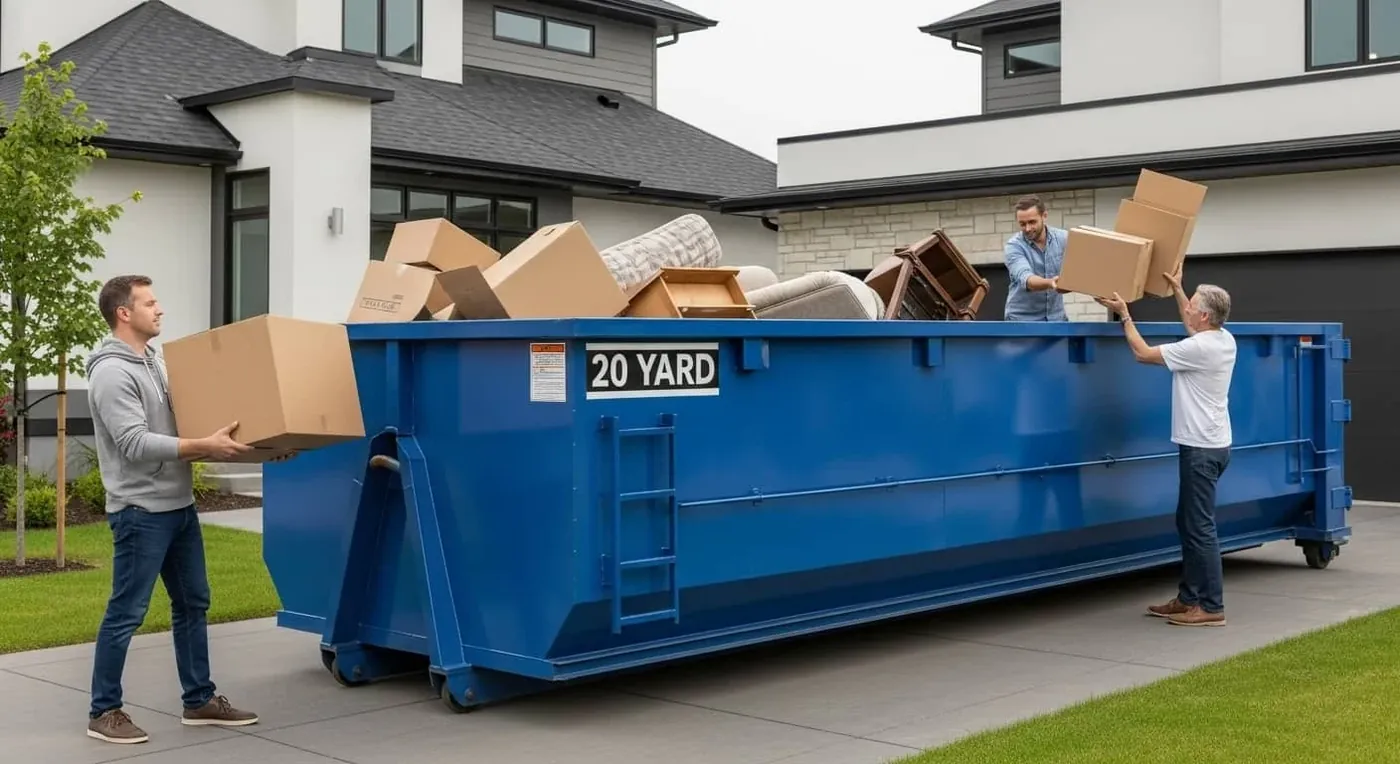
Nobody plans for this the way they plan a kitchen remodel. You get a phone call, or a diagnosis, or a closing date from a realtor, and suddenly you're standing in a house that took your parents fifty years to fill, trying to figure out how to empty it in a weekend. We've delivered enough of these containers around Naperville's older neighborhoods and out toward Will and Kane counties to know the emotional part and the logistical part fight each other the whole way through. This is the plan we walk families through on the phone, in order, so you don't lose something irreplaceable while you're racing a closing date.
Before anyone touches a closet or calls in a crew, walk the house once with a folder and a shoebox. This takes an afternoon and prevents the calls we get most often — a lost deed, or a ring donated by accident.
Once that folder is filled and the valuables are in a locked car trunk or a family member's house, the rest of the home can be worked through without that background anxiety.
Every room, every closet, every drawer gets sorted into four piles. Don't skip a category to save time — it's what causes decision fatigue two days in.
Working room by room with four labeled areas (we tell people to use painter's tape and cardboard signs on the garage floor) keeps the whole house moving at the same pace instead of stalling in one bedroom for six hours.
| Room | What usually takes longest | Practical note |
|---|---|---|
| Kitchen | Cabinets, small appliances, pantry | Check expiration dates fast; unopened non-perishables can often be donated to a local food pantry |
| Primary bedroom | Dresser drawers, closet, nightstand | Highest concentration of jewelry, cash, and documents — go slow here |
| Home office / den | Filing cabinets, desk drawers | Where most of the legal and financial paperwork lives |
| Basement | Storage boxes, holiday decor, old furniture | Often has the heaviest and bulkiest dumpster items — budget extra time |
| Garage | Tools, chemicals, paint cans, car care products | This is where most items that legally can't go in a dumpster get found |
| Attic | Old documents, photos, seasonal items | Check insulation and heat before committing a full day — work mornings if unconditioned |
| Bathrooms | Medications, toiletries | Fast to clear once medications are pulled for take-back |
Good furniture and housewares from an estate don't belong in a container, and locally there are solid places for them. The Naperville ReStore (868 Rte. 59), run by DuPage Habitat for Humanity, takes furniture, working appliances, cabinetry, and building materials, and the proceeds fund local home builds — it's usually our first suggestion for larger furniture pieces. The Goodwill Store & Donation Center at 539 Fort Hill Drive takes clothing, housewares, books, and smaller household goods. If the pantry or freezer has unopened, non-perishable food, Loaves & Fishes Community Services on High Grove Lane accepts food donations for DuPage County families in need. Call ahead on quantity for any of these — an estate cleanout donation load is usually bigger than a normal drop-off, and some locations want a heads-up or a scheduled time for large hauls.
Illinois solid waste rules keep several estate-cleanout regulars out of roll-off containers: electronics (TVs, computers, monitors are banned from Illinois landfills under state law), appliances with refrigerant (refrigerators, freezers, some air conditioners and dehumidifiers), paint, household chemicals, motor oil, batteries, and tires. These aren't optional exclusions — they're the items that get a load rejected at the landfill and can carry fines back to the generator.
The good news for Naperville families: the Household Hazardous Waste Facility at 156 Fort Hill Drive is a joint operation between the City of Naperville, DuPage County, and neighboring counties, open Saturdays and Sundays, 9am to 2pm, no appointment and no fee, and it takes paint, household chemicals, batteries, fluorescent bulbs, propane tanks, and automotive fluids from any Illinois resident. Electronics go to the Environmental Collection Campus at 156 Fort Hill Drive (Monday to Friday, 7am to 3pm). Tires need a separate outlet — we're happy to point you to the current one when you call. For a fuller breakdown of what's allowed and what isn't, our guide on what can go in a dumpster in Illinois covers it room by room.
This is the question we field most on the initial call, and it depends heavily on how much is actually leaving in the donate and dispose piles versus staying in the family.
If you're not sure which way to size it, our dumpster sizing guide walks through the math, and we'd rather talk it through with you directly — call (331) 244-7243 and describe the house and we'll size it right the first time instead of guessing low and paying for a second delivery.
Most probate and estate sale timelines in DuPage, Will, and Kane counties give you somewhere between three and six weeks before a closing date is locked. Here's how we'd sequence it if the closing is roughly four weeks out.
If your timeline is tighter than four weeks, compress weeks 1 and 2 into a single intense weekend rather than skipping the document-securing step — that's the one step that can't be rushed without real risk.
The families who get through this cleanly do a few things the same way every time. They put the dumpster in the driveway, not the street, avoiding a permit entirely (our Naperville permit guide covers the rare cases where street placement is unavoidable). They load heavy items first — furniture, carpet, fixtures — so weight doesn't shift on lighter debris later. And they keep one person off sorting duty, running donation drop-offs and HHW runs, since that alone can eat a full day.
If the volume is more than a couple of family members can move in a weekend, especially with a fixed closing date, it's often faster to bring in help for the physical labor rather than the sorting — our junk removal crew can clear a garage or basement in a few hours once the keep and family piles are out. And if the home needs work before it's market-ready — flooring pulled, a deck removed, old fencing down — that's a separate scope from the cleanout itself; our demolition debris and residential dumpster rental pages cover that side. For the cleanout itself specifically, see our estate cleanout service page for how we handle scheduling around family availability and closing dates.
We've sat in enough driveways with families going through this to know the container is the easy part. Call us at (331) 244-7243 or send details through our contact page — we serve Naperville and the western suburbs across DuPage, Will, and Kane counties, and we'd rather size this right than sell a second delivery.
FAQs
For an average 3-4 bedroom single-family home, plan on two to three weeks from the day you start sorting to the day the dumpster is picked up, assuming one or two dedicated work weekends. Condos and smaller homes can often be done in a single week. The document and valuables step at the start shouldn't be rushed even if the rest of the timeline is tight.
No. Appliances that hold refrigerant have to be handled separately because of EPA rules on refrigerant recovery. We can often arrange separate pickup for these, or you can check with an appliance recycler — just don't load them into the roll-off, since the hauler will have to pull them back out.
Medications should go to a police department or pharmacy take-back location rather than the trash or a donation pile. Firearms need to be secured, unloaded, and handled through a legal transfer process — Illinois requires a valid FOID card for possession, so this isn't something to sort into a donate or dispose pile at all.
Most single-family homes in Naperville land on a 20-yard dumpster once donations are pulled out separately; condos and smaller homes often work with a 15-yard or even 10-yard. Large homes with full basements, attics, and garages sometimes need a 30-yard to avoid a mid-project swap. Call us with a room count and we'll size it based on what's actually in the house.
Yes — estate cleanouts on a probate or closing timeline are most of what we do in this category, and we schedule delivery and pickup around your dates rather than a generic weekly route. Call (331) 244-7243 as soon as you have a rough closing date and we'll work backward from it with you.
Ready when you are
Call and you will speak to someone local who knows the streets, the permit rules and which box actually fits your driveway. Flat rate quoted up front.
Keep reading
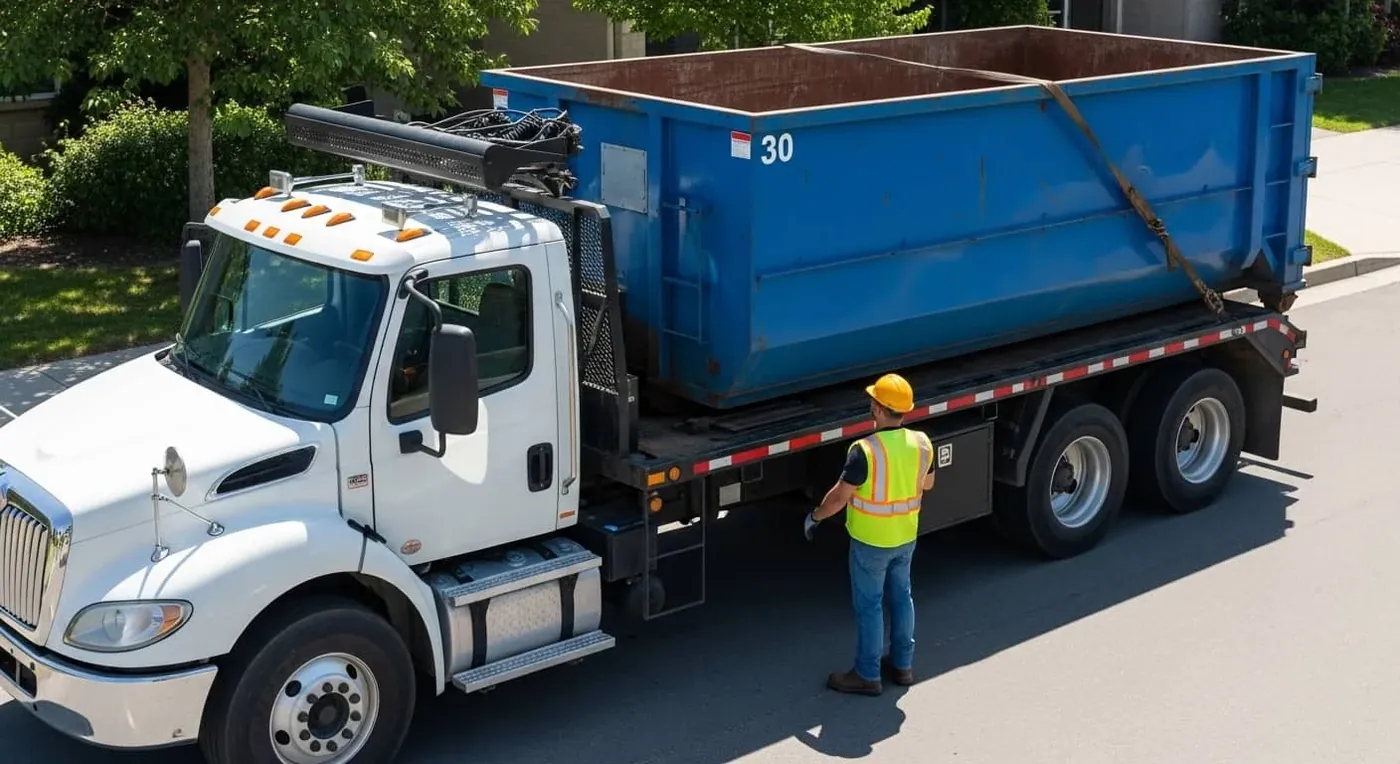
Roofing debris is the one job where the container fills up on weight, not space. Here's the squares-to-pounds math we use to size tear-off dumpsters for Naperville roofs, layer by layer.
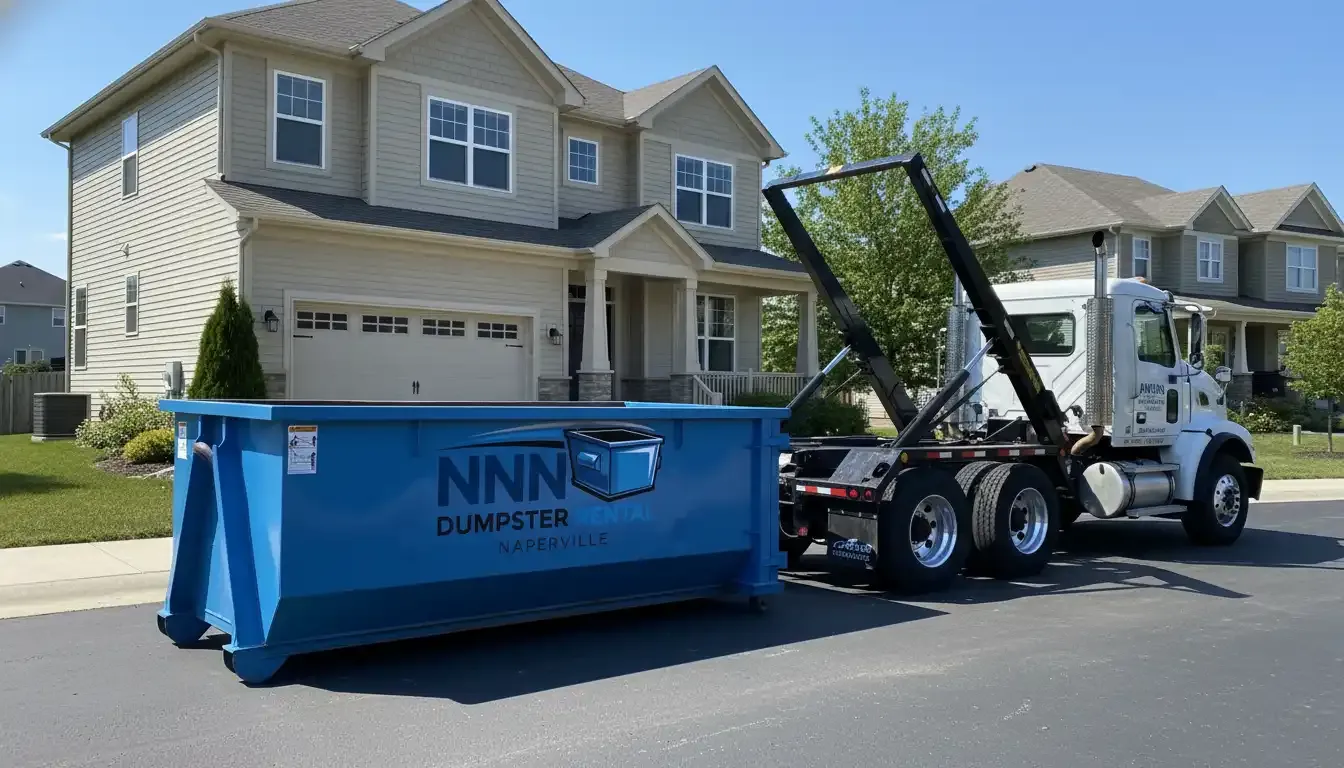
A roll-off doesn't damage driveways the way most homeowners picture it. It's not the weight of the trash — it's concentrated point loads at the rear rollers, softened summer asphalt, and a delivery truck that outweighs the loaded box itself. Here's how we actually protect your driveway.
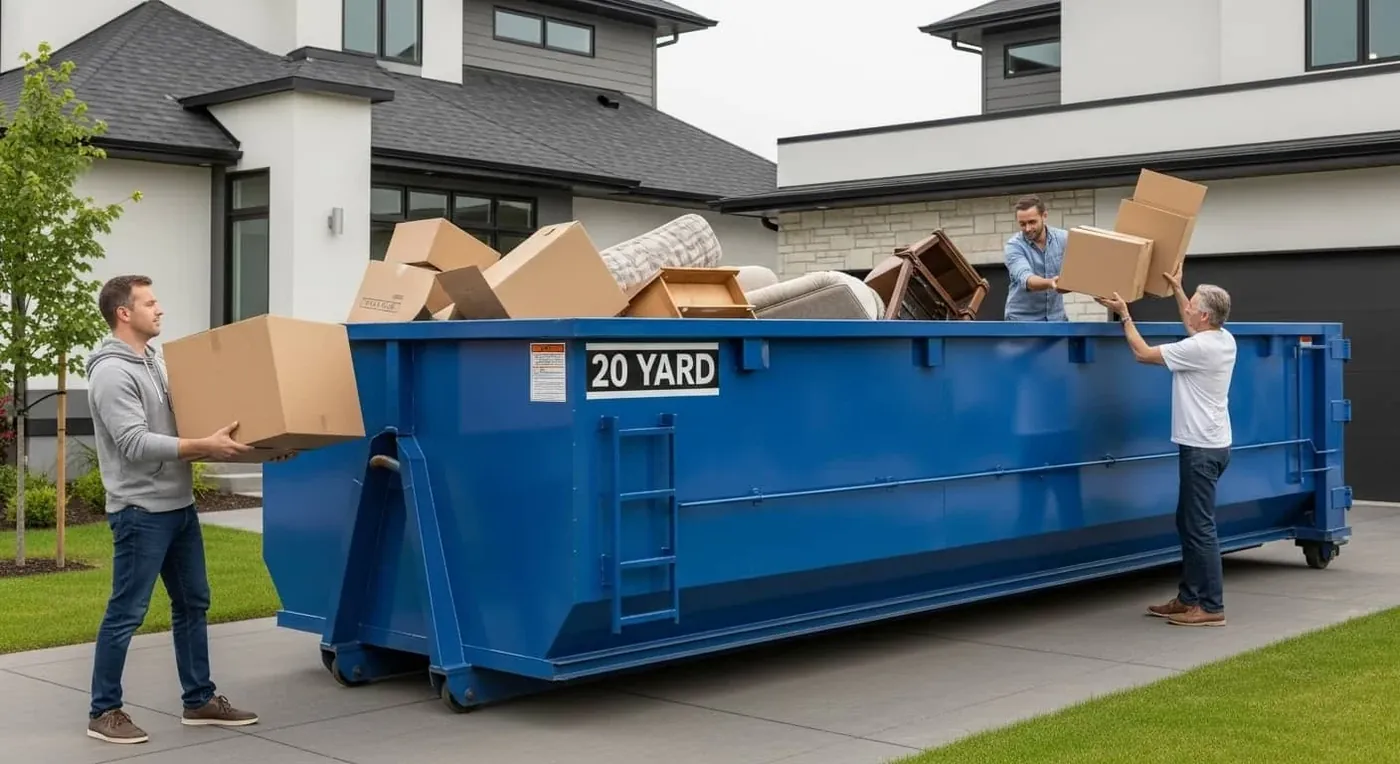
Most cleanouts stall by Saturday afternoon because there's nowhere to put the "go" pile. Here's the room-by-room, hour-by-hour plan that clears a full Naperville house in one weekend — container first, garage to kitchen in order, and where the Illinois-banned items actually go.