Naperville, IL
Demolition Debris Removal in Naperville
Roll-off dumpsters sized and rated for garage, shed, deck, fence, pool and interior gut demolition across Naperville and DuPage County, with straight answers on City permits, JULIE utility locates, and what a dumpster legally can't be used for.
- Same dayDelivery available
- Flat rateQuoted up front
- Since 2012Locally owned
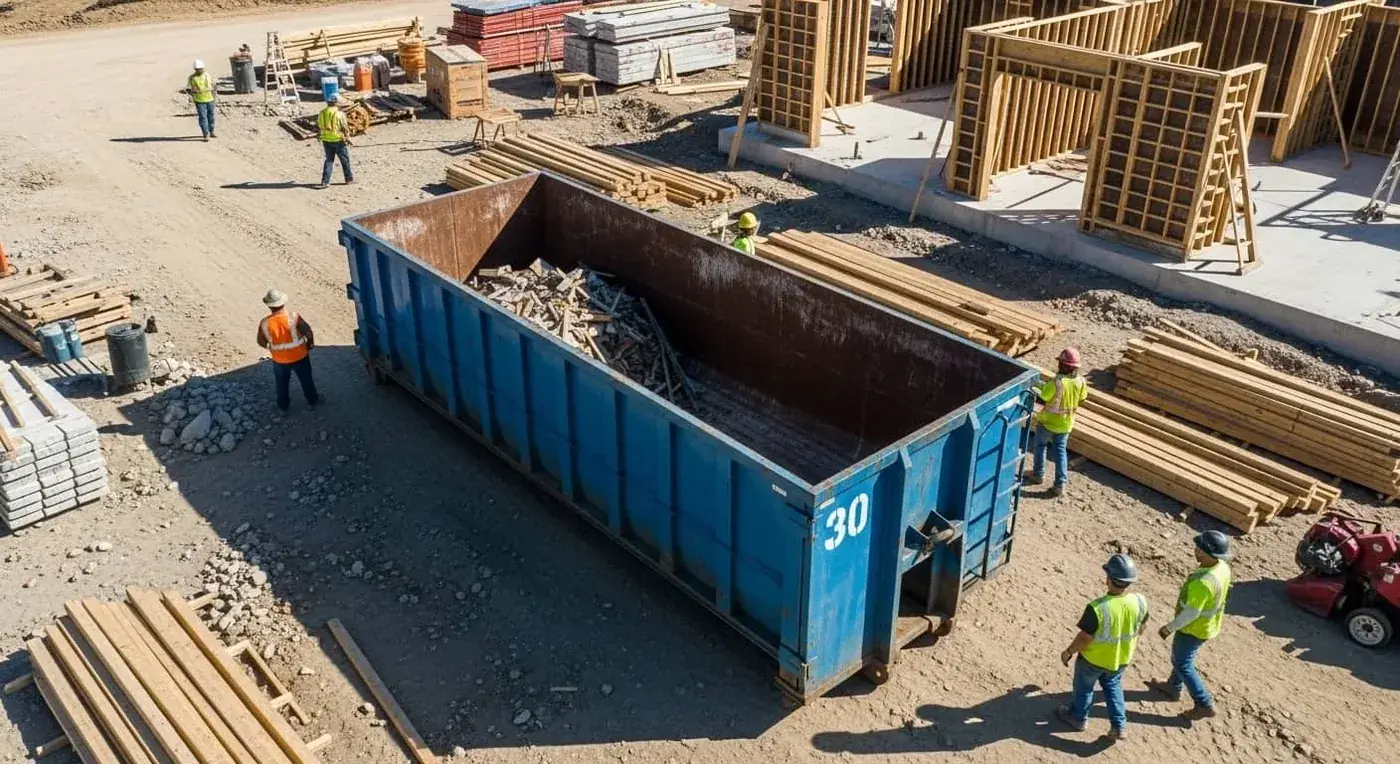
Demolition debris is not the same animal as a household cleanout, and pricing it or sizing it like one is how people end up with a dumpster that's over its weight limit before it's half full. We've been pulling garages, sheds, decks, fences and pools out of Naperville yards since 2012, and the boxes we send to a teardown job are the same steel roll-offs we send to a basement cleanout — the difference is how we size them, what we tell you to keep out of them, and what we tell you to line up before we ever drop one off.
This page covers what actually comes up on demolition jobs around here: garage and shed teardowns behind the older bungalows near downtown, decks and fences that have been rotting out since the Reagan administration, above-ground and in-ground pool removals, and interior gut work ahead of a remodel. It also covers the parts that aren't about dumpsters at all — permits, JULIE locates, and asbestos in older housing stock — because getting those wrong costs a lot more than getting the container size wrong.
What we handle on demolition debris removal jobs
- Sized for demo weight, not just volume — concrete and masonry fill the tonnage cap fast
- Separate concrete and clean wood loads to cut disposal cost on mixed teardowns
- City of Naperville demolition permit required for structures — confirm current requirements before scheduling
- Illinois law requires a JULIE (811) utility locate before any digging or structure removal
- Suspect asbestos or lead paint in pre-1978 homes requires licensed abatement, not a dumpster
- Historic District teardowns need a Certificate of Appropriateness in addition to the standard permit
- Phased demo jobs can run multiple boxes or same-day swap-outs to keep trades moving
- Flat-rate pricing with no fuel or delivery surcharges added after the fact
Why Demolition Debris Needs Different Sizing Than Everything Else
A 30-yard dumpster looks huge sitting in a driveway, and homeowners assume it'll swallow a whole garage teardown with room to spare. It usually won't — not because of volume, but because of weight. Every dumpster we run has a tonnage limit built into the flat rate, and demolition materials blow past that limit long before the box looks full.
Framing lumber, drywall, and asphalt shingles are light for their size. Concrete footings, block foundation walls, brick, plaster-and-lath, and wet clay-soil spoil are not. A shed's worth of dimensional lumber might weigh 800 pounds; the same size pile of broken concrete footing can weigh 4,000 pounds or more. We size demo jobs by what's actually coming down — wood-frame vs. masonry vs. mixed — and we'll tell you up front if a job needs a second box for concrete instead of one oversized container, because that split almost always costs less than one giant dumpster loaded past its rating.
Call (331) 244-7243 before you start swinging a sledgehammer and describe what's coming down — wood shed, block garage, poured pool deck — and we'll tell you the right size and whether you need one box or two.
Permits, Utility Locates and What Has to Happen Before Demo Starts
The City of Naperville requires a demolition permit for structures — garages, sheds over a certain footprint, houses, additions — before you take them down, with additional review and a Certificate of Appropriateness if the property sits inside the Historic District. Requirements, thresholds and current fees change, so don't work off what a neighbor did five years ago; check with the City's permits office directly before you schedule anything, including us. We'll hold a delivery date for you, but we won't tell you demo permits don't matter, because they do and the City does enforce it.
Separately from the City permit, Illinois law requires you to call the state's one-call utility locate service — JULIE (811 or 1-800-892-0123) — at least a few business days before any digging, structure removal, or excavation, residential or commercial. This isn't paperwork for its own sake: gas, electric and communication lines run shallower than people expect, and a sheared line during a garage or pool teardown is a real hazard, not just a fine. Get your locate ticket, get your permit, then call us for the dumpster. In that order.
If a deck or shed is being removed, confirm with the City whether it needs its own permit or falls under a threshold exemption — this varies by structure size and whether it's attached to the house, so don't assume.
Asbestos and Lead: When a Dumpster Is the Wrong Tool for the Job
Naperville's housing stock runs old in the neighborhoods closest to downtown and inside the Historic District, where homes date from the 1840s through the early 1900s. Pre-1978 construction almost always means lead-based paint is somewhere in the picture, and homes built or renovated through the 1970s commonly used asbestos in floor tile, pipe insulation, plaster skim coats, and old ductwork, and plaster-and-lath walls in particular can carry asbestos in the plaster mix itself.
We are not an abatement contractor, and we won't pretend a dumpster rental is a substitute for one. If there's any reasonable chance your teardown involves suspect material — old tile, taped duct joints, textured ceiling, crumbling plaster — get it tested and, if needed, removed by a licensed asbestos or lead abatement contractor before demo starts. Illinois EPA and IDPH regulate this material as hazardous waste, and it is not legal to load it into a roll-off dumpster for disposal as ordinary construction debris. Once the abatement contractor has cleared the space, we're glad to bring in a box for everything else — wood, drywall, non-suspect plaster, fixtures.
Garages, Sheds, Decks, Fences and Pools: What Naperville Jobs Look Like
A big share of our demo calls are the same handful of projects, repeated across every subdivision in Naperville, Aurora, Lisle, and Wheaton:
Garages and sheds. Detached garages from the 1960s-80s building boom are aging out, and a lot of near-downtown lots are tearing down old sheds ahead of a rebuild or addition. Wood-frame structures are light debris; block or brick garages run heavy and often need a dedicated concrete box for the slab.
Decks and fences. The pressure-treated deck boom of the 1970s and 80s is now a rot problem — ledger boards pulling off the house, footings heaving from DuPage clay freeze-thaw cycles. Deck and fence teardown debris is light but bulky; it fills a box by volume before weight is ever a concern.
Pools and hot tubs. Above-ground pool removal is straightforward debris — the liner, the frame, the sand or gravel base. In-ground pool demolition is a different job entirely and usually falls under its own permit and structural requirements the City reviews separately; the pool shell itself (gunite, fiberglass, or vinyl-over-concrete) is heavy, dense material that needs a concrete-rated box, not a standard construction container.
Interior gut-outs. Kitchens, basements, and whole-interior strips ahead of a remodel generate drywall, cabinetry, flooring and plaster. In pre-1978 homes, this is exactly the scenario where a lead or asbestos check belongs on the schedule before the sledgehammer comes out.
Sizing Demo Jobs: Quick Reference
| Project | Typical Debris | Recommended Size |
|---|---|---|
| Wood shed or fence teardown | Framing lumber, siding, roofing felt | 10-yard |
| Deck removal | Pressure-treated lumber, ledger, footings | 15-yard |
| Detached wood-frame garage | Framing, siding, roof deck, drywall | 20-yard |
| Above-ground pool removal | Liner, frame, sand base | 15-yard |
| Block or brick garage | Masonry, block, slab concrete | 20-yard concrete box |
| In-ground pool shell demo | Gunite, concrete, rebar, deck | Concrete & heavy debris box |
| Interior gut-out (kitchen, basement) | Drywall, cabinets, flooring, plaster | 20-yard |
| Small home teardown | Mixed framing, masonry, roofing, plaster | 30-yard plus concrete box |
These are starting points, not guarantees — weight is what actually caps a demo box, and we'd rather talk through your specific structure on the phone than have you guess. If the project is part of a larger remodel rather than a straight teardown, our construction dumpster rental page covers ongoing build debris once demo wraps.
Concrete Separation, Phasing and Staging Multiple Boxes
The single biggest cost lever on a demo job is keeping concrete, block and brick separate from wood, drywall and roofing. Mixed loads get charged and weighed as the heaviest material in them; clean concrete loaded into a dedicated concrete-rated box is billed by a completely different, lower rate structure because it's inert material with its own disposal stream. If your teardown includes a slab, footings or a block foundation, ask us about a dedicated concrete and heavy debris container alongside your general demo box — it almost always costs less than dumping it all in one oversized general dumpster.
For anything bigger than a single shed or fence, think in phases rather than one box for the whole project. A garage teardown might run: box one for framing and roofing as the structure comes apart, swap for box two once the slab is exposed and broken up. On a multi-day job we'll either stage a second dumpster alongside the first so both trades can work without waiting on a truck, or run a swap-out where we pull a full box and drop an empty one same day. Either way, plan your driveway and street space — Naperville right-of-way rules apply if a box needs to sit in the parking lane, and we can advise on that when we schedule.
Site safety matters as much as sequencing: keep the drop zone clear of overhead lines, don't let debris pile against the container above the fill line, and keep foot traffic away from a structure that's only half down. A dumpster staged too close to an unstable wall or a garage that's partway demoed is a hazard, not a convenience.
Right-sized
Which dumpster for demolition debris removal in Naperville?
We would rather talk you down a size than sell you air. These are the boxes that suit this work.
15-Yard Dumpster Dumpster
Right-sized for a single deck, fence line, or above-ground pool removal where debris is bulky but not dense.
Size details 20Cubic yards20-Yard Dumpster Dumpster
Our most common call for a wood-frame garage, shed, or interior gut-out — enough volume without inviting an overweight load.
Size details 30Cubic yards30-Yard Dumpster Dumpster
For small home teardowns and larger mixed-structure demo, typically paired with a dedicated concrete box for the slab and footings.
Size detailsLocal knowledge
Demolition Debris Removal across Naperville and DuPage County
Naperville's teardown activity concentrates in a few predictable spots: near-downtown lots inside and around the Historic District where 1840s-1917 homes are being gutted or replaced, and the older subdivisions ringing downtown where 1970s and 80s decks, sheds and above-ground pools are finally being retired. Both come with local wrinkles worth knowing before you book a box.
Historic District properties (roughly the area bounded by the DuPage River, Aurora Avenue, Loomis Street and Ellsworth Street) carry design review on top of the standard building permit, and the housing stock there was largely built with plaster-and-lath interior walls — a material that can contain asbestos and should be tested before demo, not assumed safe. Outside the District, we're regularly pulling out failing decks and sheds from the original subdivision-era construction, where footings have heaved from DuPage County's clay-heavy soil going through repeated freeze-thaw cycles — which is also why we push customers toward scheduling demo for the spring and fall windows when the ground's workable rather than fighting frozen spoil in January.
For the permit itself, the City of Naperville's Permits & Licenses office has current demolition permit requirements and the Historic District review process. Before any digging or structure removal, call JULIE, Illinois's one-call utility locate service, at 811. We serve demo jobs throughout Naperville, DuPage County, Will County and the western suburbs — see our full service area or check a specific town like Wheaton or Plainfield.
Towns we cover
We run demolition debris removal out of our High Grove Lane yard across Naperville and the surrounding suburbs.
FAQs
Demolition Debris Removal questions, answered
Do I need a permit to tear down a garage or shed in Naperville?
In most cases, yes — the City of Naperville requires a demolition permit for structures, and additional review applies inside the Historic District. Requirements and thresholds can change and vary by structure size, so confirm directly with the City's Permits & Licenses office before you schedule demo or a dumpster.
Do I really need to call JULIE for a shed or deck teardown?
Yes. Illinois law requires a call to JULIE (811 or 1-800-892-0123) before any digging or structure removal, residential or commercial, regardless of how small the project looks. Utility lines run shallower than most people expect, and it's free to have them marked.
Can I put concrete or a pool shell in a regular demolition dumpster?
Not in a standard box, and we won't load it that way even if it fits. Concrete, block, brick and pool shells need a dedicated concrete-rated dumpster because of weight — a regular demo box will hit its tonnage limit long before it's visually full. Ask about pairing a concrete box with your general demo dumpster.
My house was built in the 1960s — do I need to worry about asbestos before demo?
It's worth checking. Homes and additions built or renovated through the 1970s commonly used asbestos in floor tile, pipe wrap, ductwork tape and plaster. If there's any reasonable chance of suspect material, have it tested and, if present, removed by a licensed abatement contractor before demolition starts — it isn't legal to dispose of it in a construction dumpster.
How big a dumpster do I need for an in-ground pool removal?
It depends on whether you're doing a full removal or a partial fill-in, and on the pool's construction (gunite, vinyl-over-concrete, or fiberglass). This is a job we size individually — call (331) 244-7243 and describe the pool and you'll get an accurate answer instead of a guess.
Can you deliver more than one dumpster for a phased demo project?
Yes. For larger teardowns we regularly stage two boxes side by side, or run same-day swap-outs where we pull a full container and drop an empty one so your crew doesn't lose a day waiting on a truck. Tell us the sequence when you call and we'll build the schedule around it.
Ready when you are
Book demolition debris removal in Naperville
Call and you will speak to someone local who knows the streets, the permit rules and which box actually fits your driveway. Flat rate quoted up front.
Keep going