Naperville, IL
Construction Dumpster Rental in Naperville, IL
Flat-rate roll-offs sized for demo, framing, drywall and finish work, delivered same day when you call before noon. We schedule around your inspections, not the other way around, across Naperville, Aurora, Wheaton and the rest of DuPage and Will County.
- Same dayDelivery available
- Flat rateQuoted up front
- Since 2012Locally owned
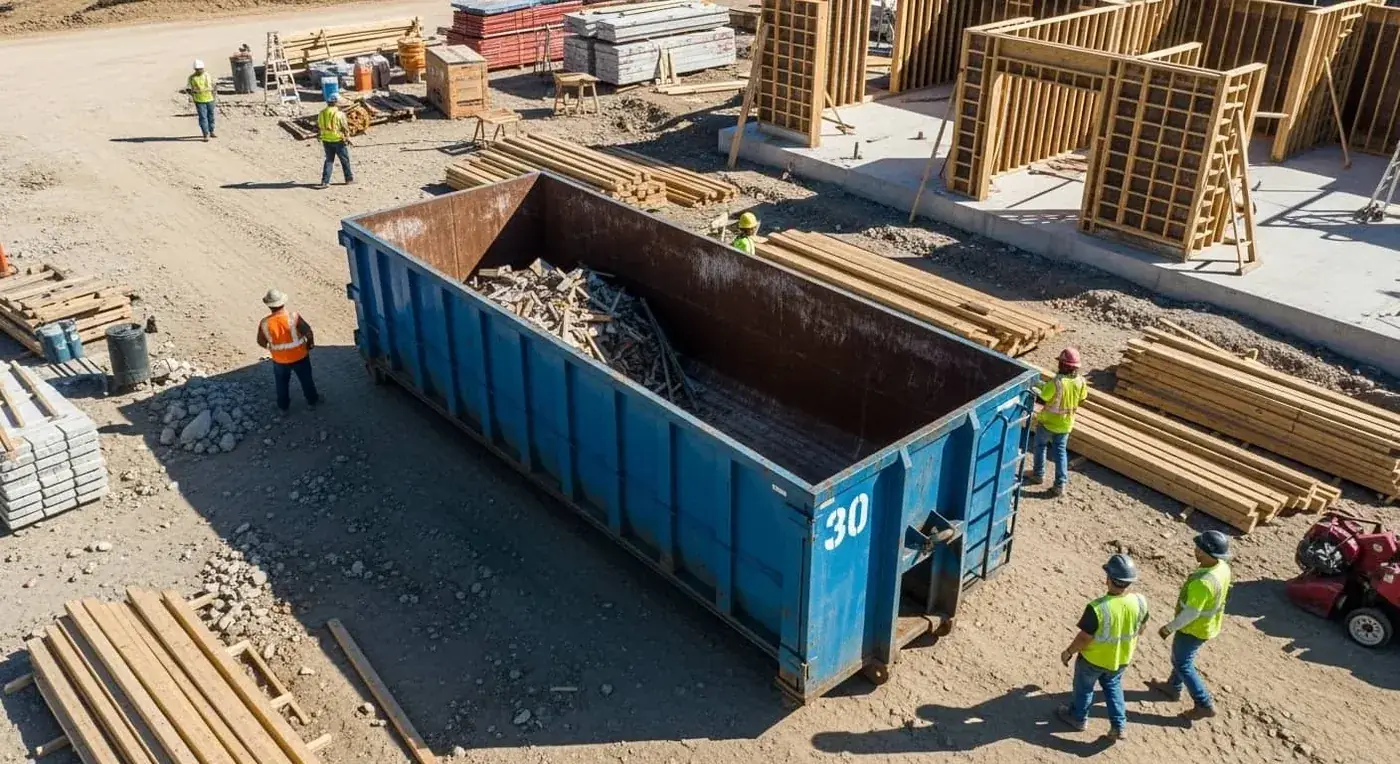
I've been dropping and pulling boxes on Naperville jobsites since 2012, and the thing that separates a dumpster vendor a GC actually keeps calling from one they fire after one job is simple: the box shows up when it's supposed to, it's the right size for the phase you're in, and the swap happens before your crew is standing around a full container instead of framing. That's the whole business model at NNN Dumpster Rental.
We run construction dumpster rental for framers, remodelers, roofers and general contractors working teardowns near downtown, additions in the older subdivisions off Washington and Ogden, and new builds out along the Route 59 and 95th Street corridors. We know which streets in the Historic District need a right-of-way permit before we can drop a container at the curb, which driveways in the newer Ashwood and Ashbury Trails subdivisions are too narrow for a 30-yard truck to swing into, and which loads are going to get flagged at the transfer station before we ever leave your site. Flat-rate pricing, one call for a swap, and a driver who's actually been to your address before.
What we handle on construction dumpster rental jobs
- Flat-rate pricing with the weight allowance spelled out before the truck leaves our lot — no guessing on a heavy demo load
- Same-day delivery when you call before noon, six days a week during active build season
- 15, 20 and 30-yard roll-offs staged for phase-by-phase sizing from strip-out to punch list
- Swap-outs scheduled around your inspections, not a generic route, so nothing sits full on inspection day
- Right-of-way permit experience for Historic District and near-downtown street placements
- Driveway protection boards available on request for freeze-thaw season and new concrete
- Licensed and insured, run by owner-operator Ryan Kowalski since 2012 — one point of contact, not a call center
- Separate heavy-debris containers for plaster, lath, tile and concrete so mixed-load overage charges don't hit your invoice
Sizing by Phase: Demo, Framing, Drywall and Finish
The single biggest mistake contractors make is renting one size for the whole job. A gut renovation generates completely different debris at week one than it does at week six, and paying to haul air in a 30-yard box during the punch-out phase is money you didn't need to spend. We size each delivery to the phase, not the address.
| Phase | Typical Size | What Fills It |
|---|---|---|
| Demo / strip-out | 20-30 yard | Plaster and lath, old cabinetry, flooring, framing lumber |
| Framing / rough carpentry | 20 yard | Cut-offs, blocking, sheathing scrap, packaging |
| Drywall / rough trades | 15-20 yard | Drywall scrap, joint compound buckets, insulation wrap |
| Finish / punch-out | 10-15 yard | Trim cut-offs, flooring scrap, packaging, small debris |
Full teardown-to-foundation jobs, especially the older near-downtown lots where the original structure predates 1920, usually start with a 30-yard dumpster for the bulk demo and step down from there. New-build framing packages and mid-size remodels tend to live in the 20-yard dumpster range. If you're not sure where your job lands, our sizing guide walks through it room by room, or just call and tell us the scope.
Weight vs. Volume: Plaster, Lath, Tile and DuPage Clay
Volume and weight are not the same problem, and construction debris is where that bites contractors hardest. A 20-yard box full of insulation and packaging might weigh 1,500 pounds. The same box full of plaster and wood lath from a 1900s Naperville teardown, tear-off shingles, or ceramic and porcelain tile can weigh 8,000-10,000 pounds before it's even two-thirds full. Flat-rate pricing only stays flat if the load stays inside its weight allowance, and overage charges are where a lot of contractors get surprised by a competitor's invoice.
We tell every GC the same thing before a demo box goes out: separate heavy material into its own container instead of layering it on top of lighter framing debris. Lath-and-plaster demo, tile tear-out, and concrete or masonry rubble should generally go in a dedicated heavy debris load rather than mixed with a general construction dumpster, because the tonnage adds up fast and a mixed load gets charged at the heavier rate for the whole box. If you're excavating footings or a basement in DuPage County's heavy clay subsoil, spoil is its own animal entirely and needs a separate haul — clay doesn't compact the way general fill does and it'll eat your weight allowance in one bucket load.
Tight Lots, Historic District Streets and Site Access
Naperville has two very different jobsite geometries and we plan differently for each. In the Historic District and the older near-downtown neighborhoods — a lot of that housing stock runs from the 1830s up through 1917, plaster-and-lath construction on narrow lots with no alley access — the dumpster usually has to sit in the street or a tight driveway apron, which means a right-of-way permit through the City before we can drop it at the curb. We pull those permits routinely and know which blocks need traffic control signage versus a simple placement permit.
In the newer subdivisions off 95th Street, Book Road and out toward Route 59, the constraint flips: driveways are often fine but the truck needs a straight, unobstructed approach of roughly 60 feet to set a box without repeated backing, plus 10 to 12 feet of clear width and enough overhead clearance for a raised roll-off body — figure 20-22 feet with the bed lifted for the drop. Low tree limbs, HOA-installed stone entry markers and parked trade vehicles from three other subcontractors are the three things that actually stop a delivery on new-build streets. A five-minute call before we roll saves both of us a rescheduled morning.
Reliable Swap-Outs That Keep Trades Moving
Nothing stalls a schedule like a framing crew standing around a dumpster that's been full since Tuesday, or an inspector showing up to a site with debris stacked past the container walls because the swap got pushed a second time. We run swap-outs on a schedule you set, not a route we happen to be near, and we call ahead so someone can flag the driver in on tighter lots.
Most GCs we work with book their next pull the day the current box hits about three-quarters full rather than waiting until it's overflowing — that gives us the lead time to slot you in without a rush fee, and it keeps the load inside legal limits so nothing gets rejected at the transfer station. If you need something faster than that, call (331) 244-7243 before noon and we'll get a swap or a fresh container out same day. For projects where timing around a rough-in or framing inspection matters, tell us the inspection date up front and we'll plan the pull around it instead of around us.
Keeping the Load Legal — and Off the Rejection List
A rejected load costs you a full day, not just a fee. Illinois bans several materials from landfill disposal outright, and transfer stations turn trucks away for them regularly: whole tires, lead-acid batteries, major appliances with refrigerants or components still attached, liquid used oil, and landscape waste like brush and leaves mixed into C&D debris. Paint cans with liquid still in them and any fluorescent tubes or CFC-containing equipment are the other repeat offenders we see on jobsites. If it's on that list, it needs to leave the site a different way — keep it out of the box.
Beyond banned materials, three things get a load rejected or hit with an overage charge at pickup: overfilling above the rim (the box has to travel the highway, so it has to sit level and tarped), mixing heavy debris into a load rated for general C&D, and loading in a way that makes the container unsafe to lift. Keep it level, keep it under the rail, and call us if a load is running heavier than expected — we'd rather swap you to the right container than have a driver turn a truck around at the gate.
Scheduling Around Naperville's Freeze-Thaw Season
Winter changes how we plan construction jobs in DuPage and Will County, not just whether we can get a truck to your site. Frozen ground makes excavation and footing work stop-and-start, which means demo and spoil removal often bunch up right before a freeze and again the moment a thaw opens the ground back up. We keep extra containers staged through the winter months for exactly that reason, so a cold snap doesn't turn into a two-week wait for a box.
Driveway and parkway protection matters more in freeze-thaw season too — a container dropped on a soft, thawing apron can leave ruts that don't show up until spring. We use protective boards under the rails on request at no extra charge; ask when you book if your approach is anything other than a straight concrete driveway.
Right-sized
Which dumpster for construction dumpster rental in Naperville?
We would rather talk you down a size than sell you air. These are the boxes that suit this work.
15 Yard Dumpster
Drywall, trim and finish-phase debris on remodels and additions where a 20 would sit mostly empty.
Size details 20Cubic yards20 Yard Dumpster
The workhorse for framing packages, kitchen and bath gut jobs, and mid-size remodel demo.
Size details 30Cubic yards30 Yard Dumpster
Full teardown-to-foundation jobs and additions generating heavy volumes of framing and plaster debris.
Size detailsLocal knowledge
Construction Dumpster Rental across Naperville and DuPage County
Naperville's contractor mix keeps us moving between two very different site types most weeks: teardown-and-rebuild jobs on the older near-downtown lots, where plaster-and-lath houses built between the 1830s and 1917 mean heavier demo loads and street placements that need a City of Naperville right-of-way permit before we can drop a box, and new construction and commercial build-out along the Route 59 and I-88 corridors, where the access problem is truck geometry rather than permitting.
We haul to the transfer and recycling facilities that actually take C&D debris rather than turning trucks around, and we build every load around what Illinois EPA keeps out of landfills — whole tires, batteries, appliances and liquid waste chief among them on jobsites. DuPage County's clay-heavy subsoil is its own scheduling factor on excavation jobs; if you're pulling footings or basement spoil, check the DuPage County recycling guide or just ask us — spoil almost always needs its own container, separate from general C&D. We serve jobsites throughout Naperville, Aurora, Wheaton, Lisle, Bolingbrook and the rest of DuPage and Will County.
Towns we cover
We run construction dumpster rental out of our High Grove Lane yard across Naperville and the surrounding suburbs.
FAQs
Construction Dumpster Rental questions, answered
Do I need a permit to put a construction dumpster in my driveway in Naperville?
No permit is needed if the container sits entirely on your own driveway or property. If it has to sit in the street, on the parkway, or block a sidewalk — common on tight Historic District and near-downtown lots — the City of Naperville requires a right-of-way permit before delivery. We handle that application routinely; see our permit guide for the full process, or ask us to walk it through for you.
What size dumpster do I need for a full house demolition?
Most complete residential teardowns in Naperville run one or more 30-yard dumpsters, sometimes paired with a dedicated container for concrete and masonry. Homes with full basements or older plaster-and-lath construction generate more weight per cubic yard, so we usually plan two swaps rather than one oversized box. Full structural demo also typically needs its own permitting — see our demolition debris page for scope details.
How much weight can go in a construction dumpster before I get charged extra?
Every flat-rate quote includes a weight allowance specific to the size you book — it's higher for a 30-yard than a 15-yard, and we tell you the number before the truck leaves. Mixed general C&D usually stays inside allowance easily; plaster, lath, tile and concrete are the materials that push a load over, which is why we recommend a separate heavy-debris container for those rather than layering them into a general box.
Can I mix drywall, wood and roofing shingles in the same dumpster?
Yes, general construction debris can be mixed in one container. Shingles are dense, though, so if a tear-off is going in with framing scrap, tell us up front — we'll size the box for the added weight rather than volume alone. If it's a standalone tear-off, our roofing dumpster rental page covers sizing specific to that job.
How much clearance does your truck need to deliver on my jobsite?
Plan on roughly 60 feet of straight, unobstructed approach so the driver isn't backing repeatedly, 10 to 12 feet of clear width, and about 20-22 feet of overhead clearance for the roll-off bed at full lift during the drop. Low branches, HOA stone entry markers and parked subcontractor vehicles are the most common things that stop a delivery on new-build subdivision streets.
What can't legally go in a construction dumpster in Illinois?
Illinois bans several materials from landfill disposal, including whole tires, lead-acid batteries, major appliances with refrigerant or mercury components still attached, liquid used oil, and landscape waste like brush mixed into C&D loads. Paint with liquid still inside and fluorescent tubes are common jobsite offenders too. Keep those out of the box — our what can go in a dumpster guide has the full breakdown, or call and we'll tell you how to handle a specific item.
Ready when you are
Book construction dumpster rental in Naperville
Call and you will speak to someone local who knows the streets, the permit rules and which box actually fits your driveway. Flat rate quoted up front.
Keep going