Construction Debris Disposal in Naperville: A Contractor's Playbook
How to run waste on a Naperville remodel or small commercial build without blowing the budget or the schedule — separation, sizing by trade, and the rules that get loads rejected.
Naperville dumpster guide
The short answer: if the dumpster sits on your own driveway, no city permit. If it touches the street, parkway, or curb, the City of Naperville requires a right-of-way permit. Here's how that actually works, plus the HOA and historic district traps homeowners fall into.

We get this call almost every week: someone's driveway is too short or already full, and they want to know if they can just drop the roll-off in the street for a few days. The answer depends on exactly where the container sits. After years of scheduling deliveries across Naperville and the western suburbs, here's what actually happens with permits, historic district rules, and the HOA calls that catch people off guard.
If your dumpster sits entirely on your own driveway or another part of your private property, the City of Naperville does not require a permit for the container itself. If any part of the dumpster touches the street, the parkway (the grass strip between sidewalk and curb), an alley, or any other city-owned right-of-way, you need a right-of-way permit from the city before it goes down. That's the whole distinction. It sounds simple, but on a lot of Naperville lots — especially older neighborhoods near downtown with narrow driveways — a 20 or 30 yard container genuinely doesn't fit without an end hanging over the curb, and that's enough to trigger the requirement.
Naperville's right-of-way permit page is direct about this: a permit is required any time a property owner or contractor needs to place equipment within the city-owned right-of-way, which includes obstruction of streets, parkways, alleys, or sidewalks. A dumpster sitting in that space counts as an obstruction, same as a construction fence or a materials pile. The permit is reviewed by the Engineering Services Team along with Public Works and city utilities, and the stated plan review window is about 14 calendar days — which is exactly why waiting until delivery morning to figure it out doesn't work if you need the street. If you're planning a roll-off dumpster rental and you're not sure your driveway has room, ask us before you book — we can usually tell from the address and container size whether you're looking at a driveway drop or a street permit.
Applications go through the city's Civic Access online portal, not a walk-in counter. You'll need the dates, times, and duration of the obstruction, plus an aerial or site photo showing where the equipment will sit. As of our last check, the posted fee schedule was $88 for a standard obstruction permit and $120 for permits involving excavation or a full street/alley closure, plus a $45 resubmittal charge and a maintenance bond that can range from $5,000 to $50,000 depending on scope. Fees change, so treat those numbers as a starting point, not gospel — confirm current amounts directly with the city before you budget for one.
The department you're dealing with is the Transportation, Engineering and Development (T.E.D.) Business Group, which oversees right-of-way permits, driveway permits, and most physical infrastructure review in Naperville. They're reachable at (630) 420-6100, option 2, or buildingpermits@naperville.il.us. If your project also involves a new driveway apron or curb work, T.E.D. reviews that too, so mention the dumpster placement in the same conversation.
Pulling a building or demolition permit for the house itself does not automatically cover the dumpster. They're two separate approvals in two different parts of the same city process, and homeowners often assume one covers the other because it's the same address and project. If your driveway can hold the container, you're fine without the additional right-of-way step. If the job needs a street-side container — common on demolition jobs where a driveway gets torn out along with the house — you still need the separate right-of-way permit, on top of whatever building or demo permit covers the structural work.
Properties in Naperville's designated historic district or on the local landmark register go through an additional layer: a Certificate of Appropriateness (COA) for most exterior work, reviewed by city planning staff or the Historic Preservation Commission depending on scope. The COA process concerns the visual and material impact of the work — additions, demolition, roofing, siding — not where a dumpster sits during the job. But if a project near Naper Settlement or downtown already requires a COA, loop that review in early, since timelines run longer than a standard building permit, and you don't want a rented container sitting idle waiting on a commission meeting date. Check the historic district regulations page if your address falls inside the boundary.
This is the one that actually derails more Naperville deliveries than the city permit does. Plenty of Naperville subdivisions have HOA covenants restricting what can sit in a driveway or front yard, for how long, and sometimes requiring advance notice to the architectural review committee before a dumpster shows up. None of this is a city ordinance — the permit office has no visibility into your HOA's rules and won't enforce them — but your HOA absolutely can, with a fine, regardless of whether you're fully compliant with the city. If you're in a covenanted subdivision, it costs five minutes to check your HOA documents or call the management company before delivery day. We've had containers show up to angry notes taped to them because nobody checked.
Naperville's municipal code prohibits parking any vehicle on city streets between 2 a.m. and 5 a.m. year-round, enforced by the police department's traffic unit. That ordinance is written around vehicles, and a stationary dumpster with an approved right-of-way permit isn't treated as an illegally parked car. But it's worth knowing the restriction exists, because a work truck, second vehicle, or trailer parked on the street alongside the container during a longer job is still subject to the 2–5 a.m. rule unless you request temporary overnight parking permission through the police department. Mixing up an approved dumpster permit with blanket coverage for every vehicle nearby is an easy mistake on multi-day jobs.
| Placement scenario | City permit likely needed? | Who to call |
|---|---|---|
| Entirely on your own driveway | No city permit required | Just check HOA rules if applicable |
| Driveway, but overhangs the sidewalk or curb | Likely yes — right-of-way permit | City T.E.D. Business Group, (630) 420-6100 opt. 2 |
| Placed in the street or parkway | Yes — right-of-way permit required | City T.E.D. Business Group / Civic Access portal |
| Front yard or lawn (non-driveway) | Usually no city permit, but check HOA | Your HOA architectural review committee |
| Historic district property, exterior work involved | COA may apply to the project; right-of-way permit only if container is street-side | Historic Preservation staff + T.E.D. if street placement |
| Gated or covenanted subdivision, any location | City rule depends on location above; HOA approval is separate and common | HOA management company |
We deliver across Naperville, Aurora, Wheaton, Lisle, Bolingbrook, and Downers Grove, and the rules aren't identical town to town. Wheaton, for example, publishes a specific Street Occupancy permit that names dumpsters directly, with a posted minimum fee around $100 for the first ten days plus a per-day charge after that and a cash security deposit — a more codified process than in some neighboring communities. Aurora, Lisle, Bolingbrook, and Downers Grove each have their own public works or engineering departments handling right-of-way obstructions, generally under the same logic — private property is unrestricted, street or parkway placement needs sign-off — but the process, fees, and enforcement vary and can change year to year. Rather than guess at another municipality's current fee schedule, we tell customers outside Naperville proper to call that town's public works department directly, or just call us — we deliver in all of these areas and can point you to the right desk.
Most residential cleanouts and driveway-based renovation jobs never touch the right-of-way rule — the container sits on the driveway, the job gets done, and the city never hears about it. The permit question comes up when the driveway is too short, too narrow, gated, or already occupied, or when a demolition job needs curb-side access. Whether you're planning a construction dumpster rental, an estate cleanout, or a roofing tear-off, tell us upfront if your driveway is tight — we'll flag the permit question before delivery day. Browse our full services lineup or see our service area across DuPage, Will, and Kane counties, and call (331) 244-7243 anytime you want a straight answer before you commit to a delivery date.
FAQs
No. The City of Naperville does not require a right-of-way permit for a container that sits entirely on your own private driveway or property. The permit requirement is specifically about placing equipment on city-owned street, parkway, alley, or sidewalk space. Your HOA rules, if you have one, are a separate matter worth checking regardless.
The city's posted plan review window is about 14 calendar days, so this is not a same-week fix if your job requires street placement. If you know your driveway can't fit the container size you need, apply as early as possible and plan your delivery date around approval, not the other way around.
Not necessarily. A building or demolition permit covers the construction work itself. If the dumpster stays on your driveway, you generally don't need anything additional from the city. If the container needs to sit in the street or parkway, that's a separate right-of-way permit reviewed by the city's Transportation, Engineering and Development group, even if you already have an active building permit.
No, that's your subdivision's own covenant, not a City of Naperville rule. The city has no involvement in HOA architectural review and won't enforce those rules, but your HOA can still fine you or ask you to move the container if you skip their process. It's worth a quick check of your HOA documents before delivery.
The general principle is similar across the area — private property placement is unrestricted, street or right-of-way placement needs a permit — but the specific process, fees, and department names differ by town and can change. Wheaton, for instance, has a named Street Occupancy permit that specifically covers dumpsters. If you're outside Naperville proper, call that town's public works or building department directly, or call us and we'll point you to the right office.
Ready when you are
Call and you will speak to someone local who knows the streets, the permit rules and which box actually fits your driveway. Flat rate quoted up front.
Keep reading
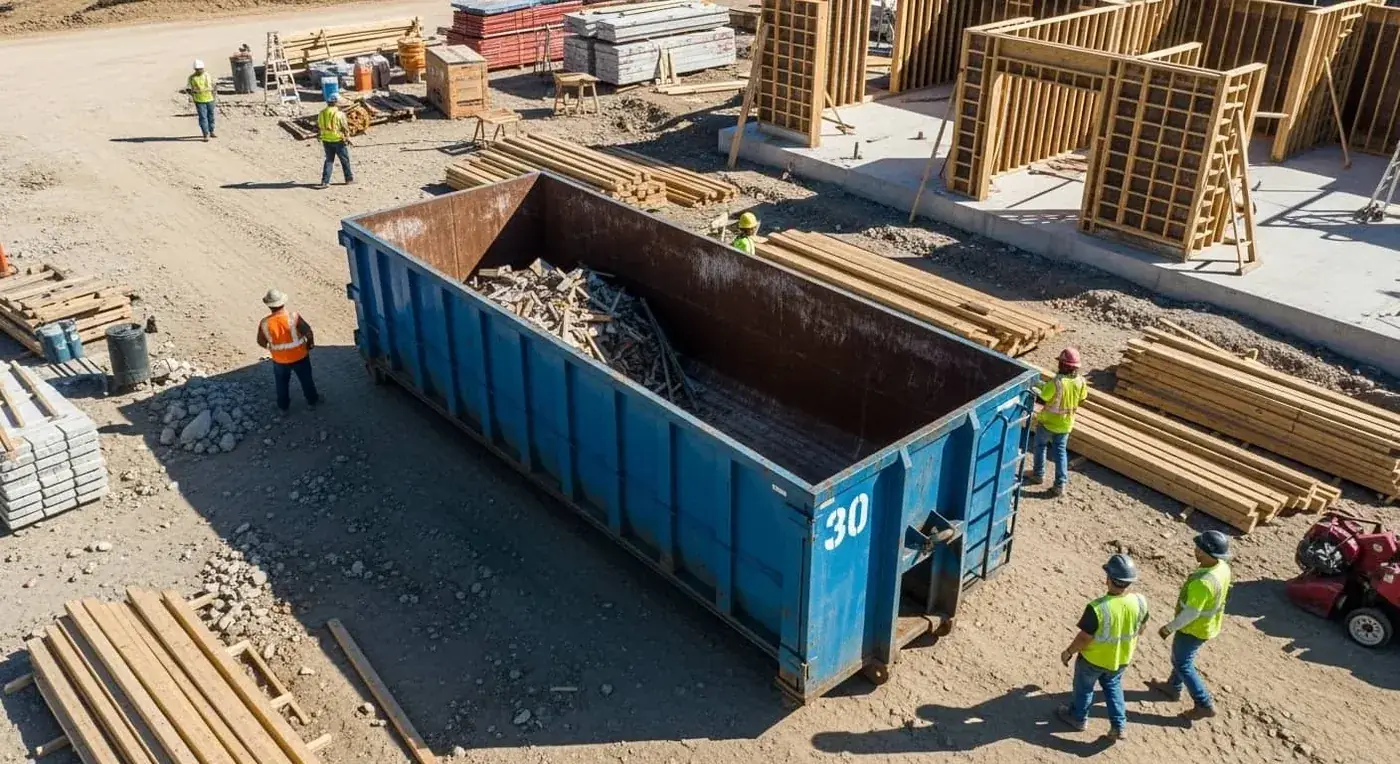
How to run waste on a Naperville remodel or small commercial build without blowing the budget or the schedule — separation, sizing by trade, and the rules that get loads rejected.

A practical, room-by-room plan for clearing a parent's home on a probate or closing deadline — what to secure first, where donations actually go in Naperville, and how to size and sequence a dumpster so the weekend doesn't fall apart.
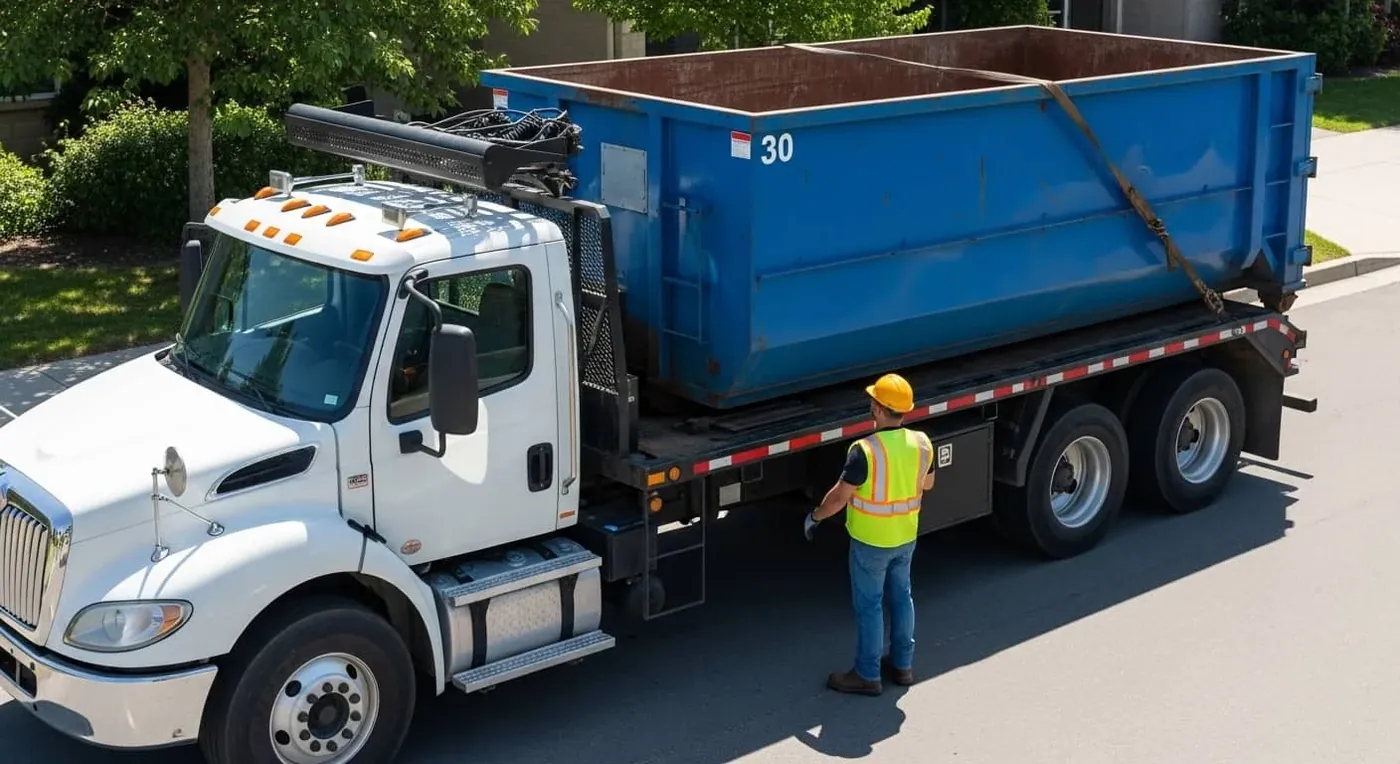
Roofing debris is the one job where the container fills up on weight, not space. Here's the squares-to-pounds math we use to size tear-off dumpsters for Naperville roofs, layer by layer.