Every roofer who's had a dumpster company call mid-tear-off to say "you're overweight, we need to swap it" already knows the lesson this article is built around: roofing debris is the one waste stream that maxes out a container's weight limit long before it ever comes close to filling the box. A 20-yard dumpster looks huge sitting in a driveway on Modaff Road. Load it with three layers of architectural shingles off a 1998 two-story in Ashbury and it can be at its tonnage cap while it's still visibly less than half full. That's the number that determines your bill and your callback rate, so it's the number worth doing the math on before the truck shows up.
Why Shingles Hit the Weight Limit First
Most construction debris — framing lumber, drywall, cabinets — is bulky and relatively light. Shingles are the opposite: dense, compact, and they stack flat with almost no air pockets. A single layer of 3-tab shingles off a 2,000 square-foot roof (roughly 20 squares) can weigh two tons before you've added a single sheet of decking. That's why roofing loads are priced and capped by weight, not by the yard, and why the sizing question for a tear-off isn't really "how big is my roof" — it's "how many pounds am I about to load, and does the container I ordered cover it."
The Squares-to-Weight Math
A roofing square is 100 square feet of roof surface. Shingle weight per square varies by product:
- 3-tab asphalt shingles: roughly 230–250 lbs per square
- Architectural (dimensional) asphalt shingles: roughly 400–430 lbs per square
That's nearly double per square, and it matters here specifically because architectural shingles are what went on most Naperville roofs built or re-roofed from the late 1990s through the 2000s — they're the standard product in subdivisions like White Eagle, Tall Grass, and Saybrook. If you're tearing off a builder-grade 3-tab roof from an older section of Cress Creek, you're on the lighter end. If it's a heavier architectural product, or a premium laminate line, plan for the higher end of that range and don't be surprised if the scale ticket comes in above your estimate.
What a Second (or Third) Layer Does to the Total
Illinois code generally allows up to two layers of asphalt shingles before a full tear-off to decking is required, and a lot of the re-roofs we haul for right now are exactly that situation — a 1990s original roof that already had one recover layer added in the 2000s, now coming off in one job. The math is simple multiplication, but it surprises people every time:
- One layer, 25 squares, architectural: 25 × ~415 lbs ≈ 10,375 lbs
- Two layers, same roof: double it to roughly 20,750 lbs
- Three layers (older homes with a rule-violating third layer discovered mid-tear-off): closer to 31,000 lbs
That jump from one layer to two is the single biggest sizing mistake we see — a crew orders based on the roof they can see, not the roof underneath it. If there's any doubt about layer count, assume two and size up, or plan on splitting the load across two containers rather than overloading one.
Sizing Table: Squares, Layers, and Recommended Container
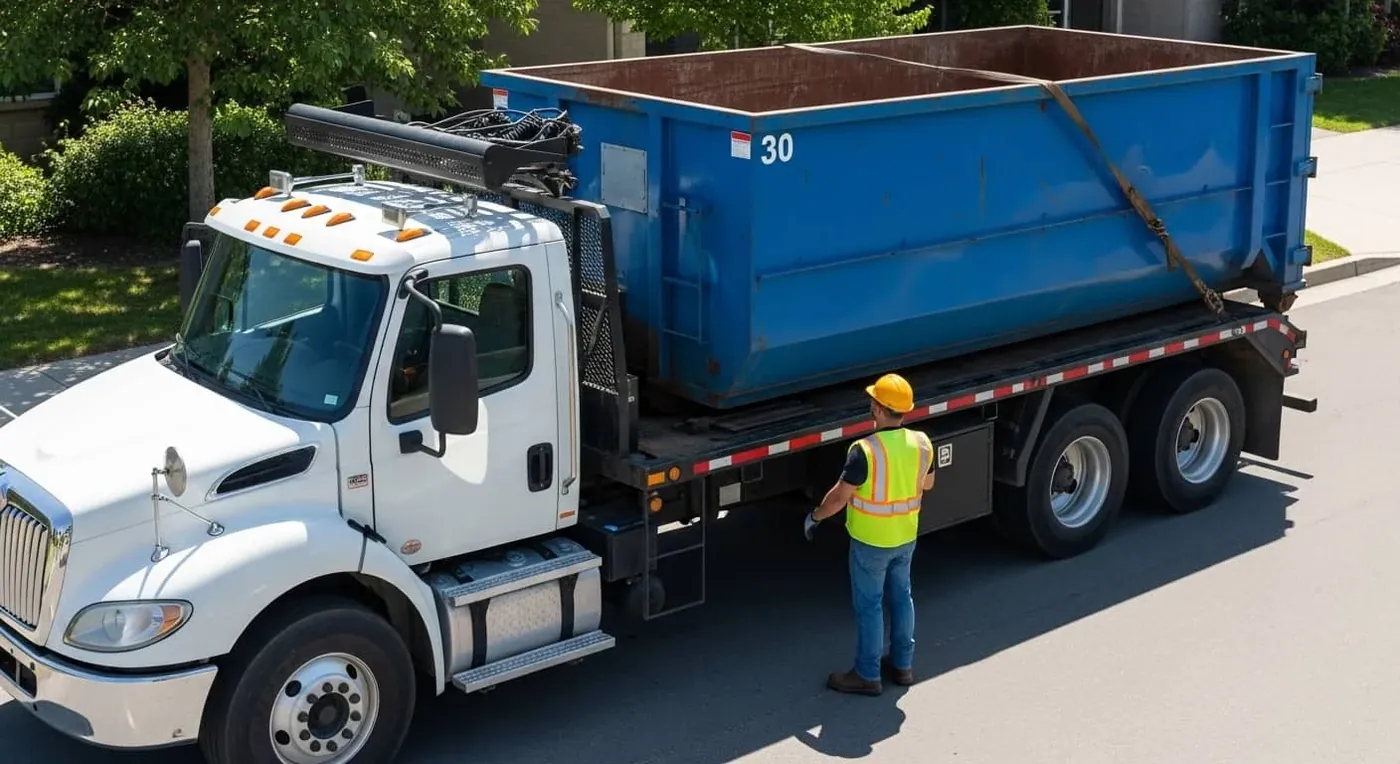
Weight caps on individual containers vary by size and by hauler, so these are planning numbers, not a guarantee — call us at (331) 244-7243 with your square count and layer count and we'll confirm the right box and the tonnage that's included before we schedule delivery. For most single-story Naperville ranch and split-level roofs under 20 squares, a 20-yard dumpster is the workhorse; two-story homes in the 25–35 square range with two layers are where we start steering people toward a 30-yard or a two-container plan instead of overloading one box and eating an overage fee.
Cedar Shake, Tile, and Slate: Different Rules
Everything above assumes standard asphalt shingles. Cedar shake, clay or concrete tile, and slate change the math substantially — tile and slate can run several times heavier per square than architectural asphalt, and a full container of either can hit its weight limit at a fraction of the volume an asphalt tear-off would use. If you're working one of the older custom homes in Cress Creek or a slate-roofed property near the historic district, tell us the material up front. We'll size smaller on volume and plan around the weight limit specifically, and in some cases split the load rather than risk an overweight container sitting on a residential street.
Don't Forget Decking, Plywood, and Underlayment
If the tear-off goes down to the deck — rotten sheathing, storm damage, or code requiring it past two layers — add that weight separately. A sheet of 1/2-inch CDX plywood runs roughly 40–50 lbs, and a typical roof replacement might swap out anywhere from a handful of sheets to a full deck. Synthetic or felt underlayment adds comparatively little, but ridge cap, flashing, and old vents add up. On a full tear-to-deck job, we generally tell customers to budget an extra 10–15% on top of the shingle-only estimate. This is also where a construction dumpster rental mindset applies more than a straight roofing load — you're mixing wood waste with shingle waste, and the container needs to be sized for both.
Placement: Set It So the Crew Can Throw Directly In
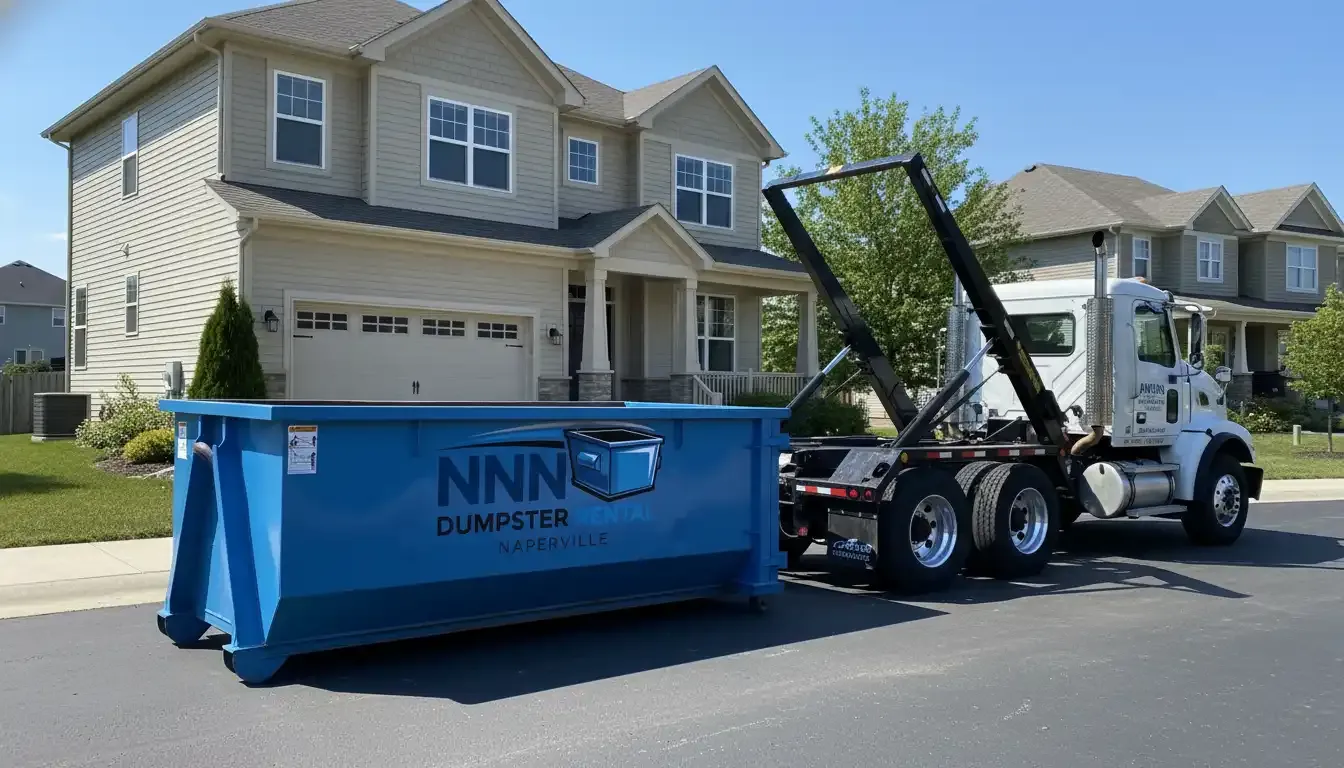
The fastest tear-offs we see are the ones where the container is spotted so the crew can pitch debris straight off the roof edge into the box, no tarping-and-carrying step in between. That means getting the dumpster as close to the eave as the driveway allows, usually angled to catch the primary pitch, with the roll-off doors facing away from the house so nothing bounces back at siding or windows. On tight subdivision driveways — and a lot of Naperville lots from the Ashbury and Tall Grass era have narrower aprons than newer builds — that often means placing the container half on the driveway and coordinating with us on exact positioning before the crew starts stripping. Call ahead with your driveway width and roof pitch and we'll tell you what fits.
Protecting the Driveway and Landscaping
A loaded roofing dumpster is heavy from the first bundle, and steel wheels on hot asphalt in July is a bad combination. We run plywood or board protection under the container feet on every residential delivery, and we'd rather hear about a low retaining wall, a narrow gate, or sprinkler heads before delivery than find out when the truck's already there. If landscaping is tight to the driveway, mention it when you book — see our driveway protection guide for more on how we place containers on older concrete and paver drives without cracking them.
Nail Cleanup and the Magnet Sweep
No tear-off is done until the yard's been swept for nails. Roofing nails migrate — off the roof, off tarps, out of gutters — and they end up in the grass, the driveway cracks, and eventually a tire or a bare foot. A magnetic roofing sweep of the entire work perimeter, done after the container is picked up and again a day or two later after anything buried works its way up, is standard practice and worth doing even if your crew already ran one pass. It's a five-minute job that prevents a much worse afternoon for the homeowner.
DuPage County's Hail and Wind Season
Spring and early summer in DuPage County bring the storm systems that generate most of the insurance-driven re-roofs we haul for — hail cells and the occasional derecho-strength wind event that rolls through the western suburbs and shreds a subdivision's worth of roofs in one pass. Combine that with Illinois freeze-thaw cycles and ice dams doing slow damage every winter, and a lot of roofs that were installed in the 1990s and 2000s boom years — Ashbury, White Eagle, Tall Grass, Cress Creek, Saybrook — are now sitting at 20 to 25 years old, right at or past the end of a typical asphalt shingle's service life. When a hailstorm hits one of those neighborhoods, we usually see a run of claims and reroofs on the same streets within a few weeks of each other, which is exactly when container availability tightens up. If your roof is in that age range and you're expecting a storm-driven replacement, it's worth booking your dumpster as soon as the adjuster approves the claim rather than waiting for the crew's start date.
Booking It Right
Give us the square count, the layer count, and the material, and we'll size the container and confirm the weight allowance before delivery — that's the difference between a tear-off that finishes on schedule and one that stalls waiting on a container swap. We deliver throughout Naperville and the western suburbs, covering DuPage, Will, and Kane counties; see our full service area for coverage, or browse our roofing dumpster rental page for what's included. For general project sizing beyond roofing, our dumpster size guide and cost breakdown cover the rest of the decision. Ready to lock in a container for your tear-off? Call (331) 244-7243 or send us your roof details through the contact page and we'll have a size and price back to you the same day.