
Dumpster Rental Cost in Naperville: What Actually Drives the Price
A local operator breaks down what really moves dumpster rental prices in Naperville - weight, size, debris type, permits - so you can compare quotes honestly.
Naperville dumpster guide
A working operator's guide to sizing 10 through 40 yard dumpsters for Naperville projects, with real jobs, driveway fit, and weight limits.

We get the same phone call three or four times a day: "I don't know what size I need, just tell me." Fair enough. After a few thousand deliveries around Naperville, from the tight lots off Sleight Street near Naper Settlement to the wide new-construction driveways out by 95th Street, we've got a good feel for what fits and what fills up. This guide walks through the five sizes we run — 10, 15, 20, 30, and 40 yard — with the real jobs each one handles, plus the two mistakes that cost homeowners the most money.
If you'd rather skip the reading, call (331) 244-7243 and we'll size it over the phone in about two minutes.
Everyone thinks about dumpster size in terms of how much stuff fits inside the box. That's half the equation. The other half, the one that trips up more Naperville homeowners than anything else, is weight. Every roll-off comes with a weight allowance baked into the rental price, and landfill tipping fees get charged per ton over that limit. A 20 yard box stuffed with drywall, plaster, or shingles can hit its weight cap while still looking half empty. That's the single most common surprise on our invoices, so keep it in mind below.
Roughly 12 feet long, 8 feet wide, and 3.5 feet tall, a 10 yard dumpster holds about 3 pickup truck loads. It's the box we bring for a single bathroom gut, a small deck tear-off, a garage shelving purge, or clearing a shed behind a Cress Creek or Knoch Knolls ranch. It fits on almost any driveway apron in town, including narrower ones near downtown.
Where it falls short: don't order a 10 yard for plaster-and-lath demo in a Historic District home. Old plaster is dense, and we've had 10 yarders max out on weight with the room only a third demoed. More below.
A step up in length and volume, the 15 yard dumpster handles about 4.5 pickup loads. This is our go-to for a two-car garage cleanout in a subdivision like Ashbury or Tall Grass, a flooring tear-out across a main level, or yard debris after a landscaping push along the DuPage River corridor. It fits comfortably on a standard 18 to 20 foot driveway, which covers most subdivisions built from the 1980s through the 2000s.
The 20 yard dumpster is what we deliver most often, and it's the right call for a kitchen remodel, a full basement finish demo, or a mid-size roofing job on a ranch or split-level. It holds roughly 6 pickup loads and handles cabinets, countertops, subfloor, drywall, appliances, and old carpet in one pull.
Basement finish projects deserve a note. A lot of Naperville basements, especially in homes built before 2000 in White Eagle or Hobson West, still have original poured concrete with old tile that needs to come up first. Pulling vinyl tile, drop ceiling grid, and framing debris, a 20 yard usually gets it done in one haul — but if you're breaking up a section of slab, talk to us about weight first, since concrete changes the math fast.
At around 22 feet long, the 30 yard dumpster holds about 9 pickup loads. We bring these for whole-house cleanouts (estate situations, hoarding cleanups, pre-listing purges), room additions, and larger garage or pole-barn demos. Clearing out a parent's home in Saybrook or Cress Creek after decades of accumulation, this is usually the size that finishes the job in one visit. Pair it with our estate cleanout service if you'd rather not haul a box yourself.
The catch is footprint: roughly 60 feet of clearance to deliver and pick up, plus a pad that can handle the weight of a loaded roll-off truck. On narrower lots near the Historic District, a 30 yard won't fit without blocking the street, meaning a right-of-way permit instead.
The 40 yard dumpster is our biggest box, built for volume rather than weight. It's the standard call for subdivision roof tear-offs, especially when a whole cul-de-sac in Ashbury or White Eagle re-roofs after hail damage and everyone's dumping shingles at once. Shingles are heavy for their volume, so on a straight tear-off we'll often recommend a 20 or 30 yard instead and plan a swap, rather than hauling mostly-empty air in a 40. The 40 earns its size on large-scale demolition, big commercial cleanouts, or a whole-house gut where framing, drywall, and flooring all come out together. See our roofing dumpster rental page for shingle weight math.
| Size | Dimensions (L x W x H) | Pickup truck loads | Typical weight allowance | Ideal Naperville projects |
|---|---|---|---|---|
| 10 yard | 12' x 8' x 3.5' | ~3 loads | 1-2 tons | Single room demo, small garage cleanout, shed removal |
| 15 yard | 16' x 8' x 4' | ~4.5 loads | 1.5-2.5 tons | Two-car garage cleanout, flooring tear-out, yard debris |
| 20 yard | 22' x 8' x 4.5' | ~6 loads | 2-3 tons | Kitchen remodel, basement finish demo, mid-size roof job |
| 30 yard | 22' x 8' x 6' | ~9 loads | 3-4 tons | Whole-house cleanout, room addition, estate cleanout |
| 40 yard | 22' x 8' x 8' | ~12 loads | 4-5 tons | Subdivision roof tear-offs, major demolition, large commercial jobs |
Dimensions and weight allowances are typical figures and vary slightly by container and load type; we'll confirm exact numbers when you book. For a broader look at what's included, visit our residential dumpster rental page or construction dumpster rental page depending on your project type.
Most Naperville driveways run 16 to 20 feet wide near the garage and narrow toward the street, especially near Ogden Ave and the neighborhoods bordering Naper Blvd. Before we deliver, we're thinking about apron width, overhead clearance from tree branches or low wires, and whether the container blocks a required fire lane on a corner lot. A 20 yard needs about 10 feet of straight clearance; a 30 or 40 yard needs closer to 60 feet total, including the truck's swing.
Clay soil is the other local wrinkle. DuPage County sits on heavy clay that holds water and heaves with freeze-thaw cycles, so a loaded 30 or 40 yard box on a soft spring lawn or unreinforced asphalt can leave ruts or cracking weeks later. Ask about placement boards when you book, or read driveway protection during dumpster delivery.
Homes near Naper Settlement and through Naperville's local historic district were mostly built with plaster over wood lath instead of drywall, roughly twice as heavy for the same wall area. A homeowner doing a single bedroom gut often orders a 10 yard expecting drywall-level weight and hits the ton limit with the room barely half demoed. If your home predates the 1950s, size up one tier, or call us first and describe the wall material.
The opposite happens just as often. A homeowner orders a 30 yard "to be safe" for what's really a garage cleanout, then we show up to a driveway that's 14 feet wide with a mailbox and a low tree limb in the way. Bigger isn't automatically safer — it's harder to place, costs more, and if it doesn't fit we may need to leave it in the street, requiring a city permit. Right-sizing to the actual project is almost always cheaper and easier.
If your project doesn't match one of these, that's normal — most jobs are a mix. Tell us the rooms, the home's age, and whether concrete, plaster, or shingles are involved. Browse our services lineup or check our service area page.
Two materials break the normal size logic: concrete and shingles. Concrete, brick, and masonry are so dense that even a small amount can hit a full ton. Pulling a patio slab, old driveway apron, or a masonry chimney, get a dedicated concrete and heavy debris container rather than mixing it into a demo box, since it's billed and sized differently. Shingles work similarly, which is why a 20 or 30 yard often beats a 40 for a straight tear-off, even on a large roof.
The Illinois EPA regulates construction and demolition debris, and DuPage County landfills enforce their own weight and material rules at the gate. Painted or treated wood in some cases, hazardous materials, tires, and electronics can't go in a standard roll-off — ask us before it goes in. For household junk that doesn't fit a construction cleanout, our junk removal service or yard waste service is often the cheaper fit. For placement rules, see the City of Naperville's right-of-way permit page, our permit guide, and what can go in a dumpster in Illinois.
Sizing a dumpster over the phone takes about two minutes because we've heard almost every version of every project in town. Tell us the rooms, the home's age, the driveway width, and roughly how much is coming out, and we'll tell you straight whether you need a 10 or a 40. Call (331) 244-7243, or check our dumpster rental cost guide. Learn more about our company, reach out through our contact page, or browse the NNN Dumpster Rental blog.
FAQs
Most Naperville kitchen remodels fit in a 20 yard dumpster. That covers cabinets, countertops, old flooring, and appliances for a standard kitchen. If you're also opening up a wall or pulling tile beyond the kitchen footprint, size up to a 30 yard to be safe.
It depends on width and clearance, not just length. Most DuPage County driveways run 16 to 20 feet wide near the garage. A 30 or 40 yard container needs roughly 60 feet of total clearance for delivery and pickup, so on narrower lots near the Historic District or on a tight corner lot, a 20 yard box or street placement with a city permit may be the better option. Call us with your driveway width and we'll confirm before delivery.
Weight allowances typically range from 1-2 tons on a 10 yard box up to 4-5 tons on a 40 yard box, and it's built into the rental price. Going over the allowance means a per-ton overage charge at pickup. Heavy materials like concrete, brick, and roofing shingles fill the weight limit long before the box looks full, which is the most common reason homeowners get an unexpected charge.
Usually yes. Homes near Naper Settlement and through the local historic district were commonly built with plaster over wood lath, which is roughly twice as heavy as drywall for the same wall area. If you're demoing original plaster walls, order one size larger than you would for a comparable job in a newer subdivision, or call us and describe the wall material so we can size it correctly.
A 20 yard dumpster holds about 6 pickup truck loads and handles most single-room remodels and demo projects. A 30 yard holds about 9 pickup truck loads and is built for whole-house cleanouts, additions, and larger demolition jobs. The 30 yard is also about 60 percent larger in footprint, so it needs more driveway clearance to deliver and place.
Ready when you are
Call and you will speak to someone local who knows the streets, the permit rules and which box actually fits your driveway. Flat rate quoted up front.
Keep reading

A local operator breaks down what really moves dumpster rental prices in Naperville - weight, size, debris type, permits - so you can compare quotes honestly.
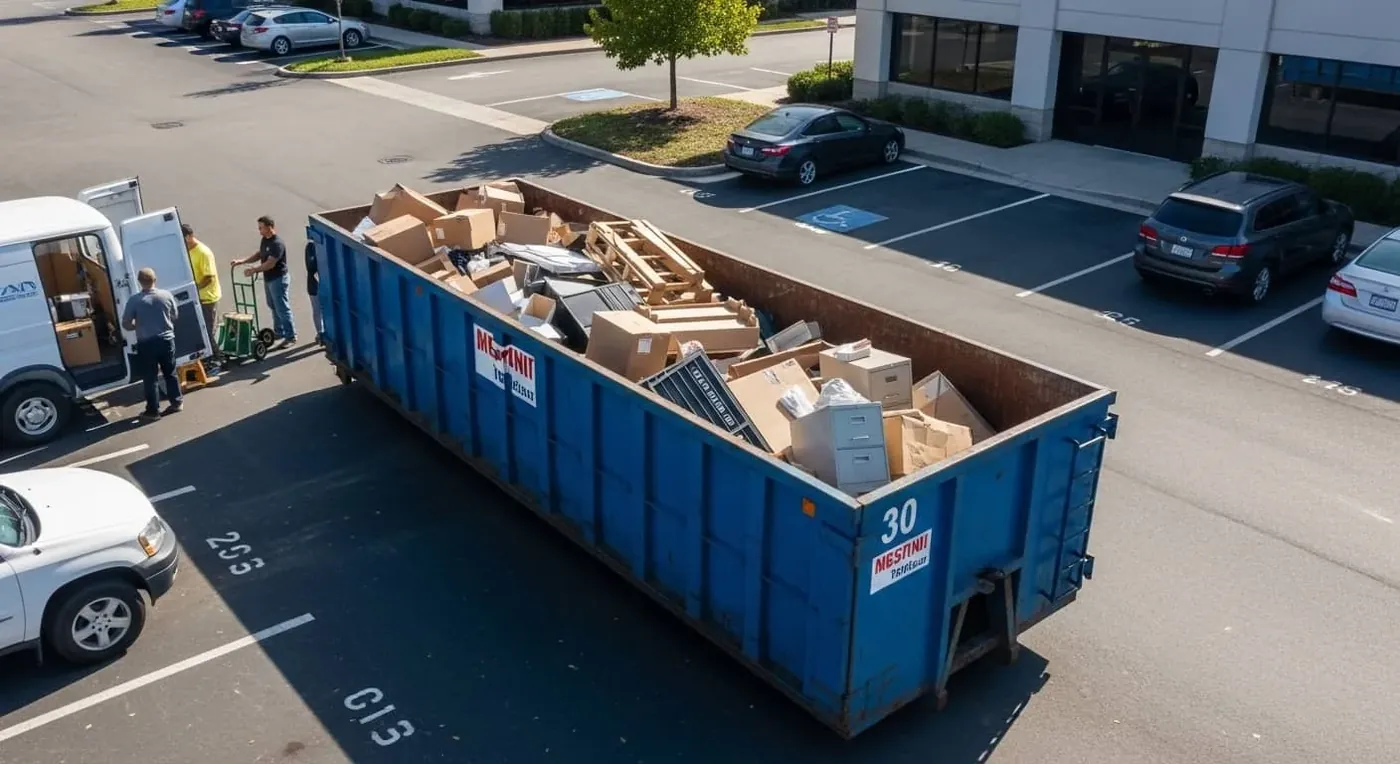
Illinois bans more from landfills than most people realize — electronics, CFC appliances, tires, batteries, and more. Here's the definitive allowed/prohibited guide for DuPage County dumpster rentals, plus exactly where the banned stuff goes instead.
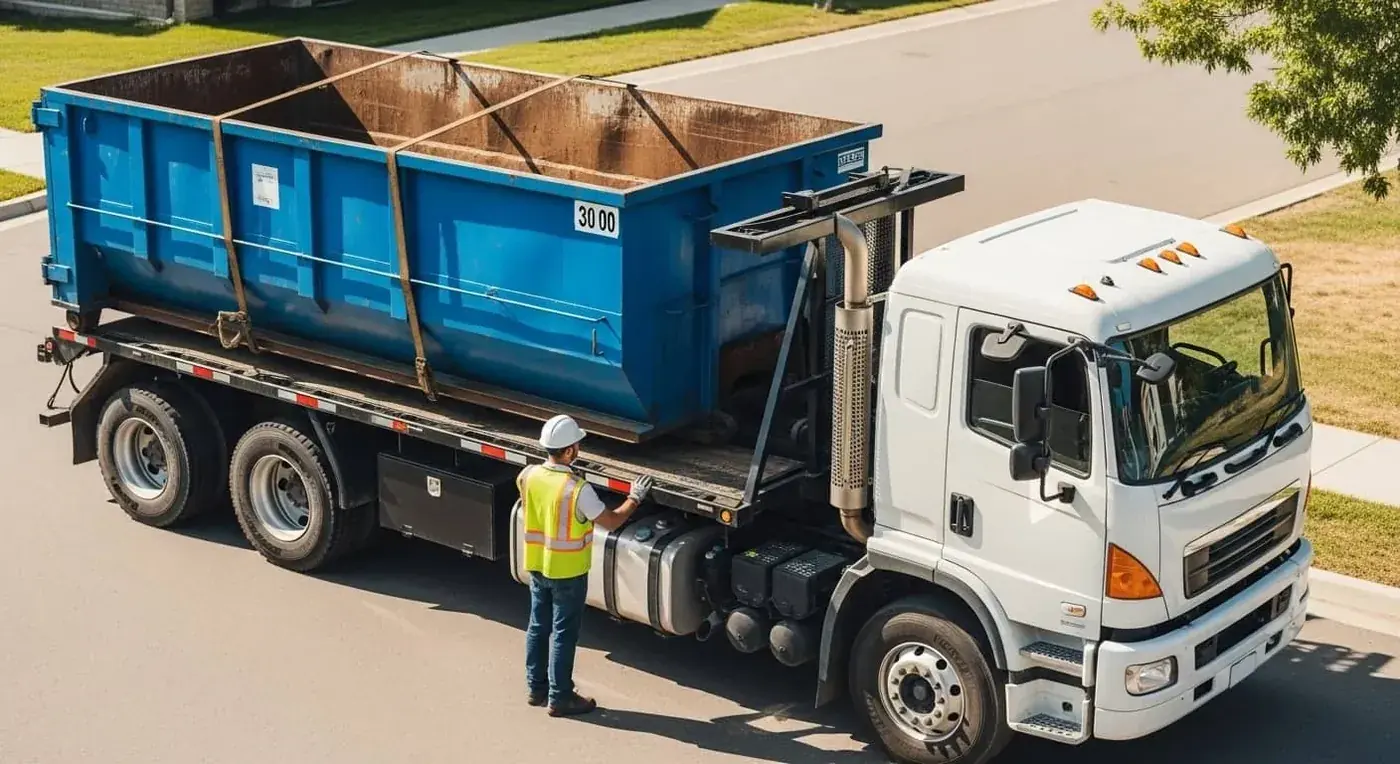
The short answer: if the dumpster sits on your own driveway, no city permit. If it touches the street, parkway, or curb, the City of Naperville requires a right-of-way permit. Here's how that actually works, plus the HOA and historic district traps homeowners fall into.