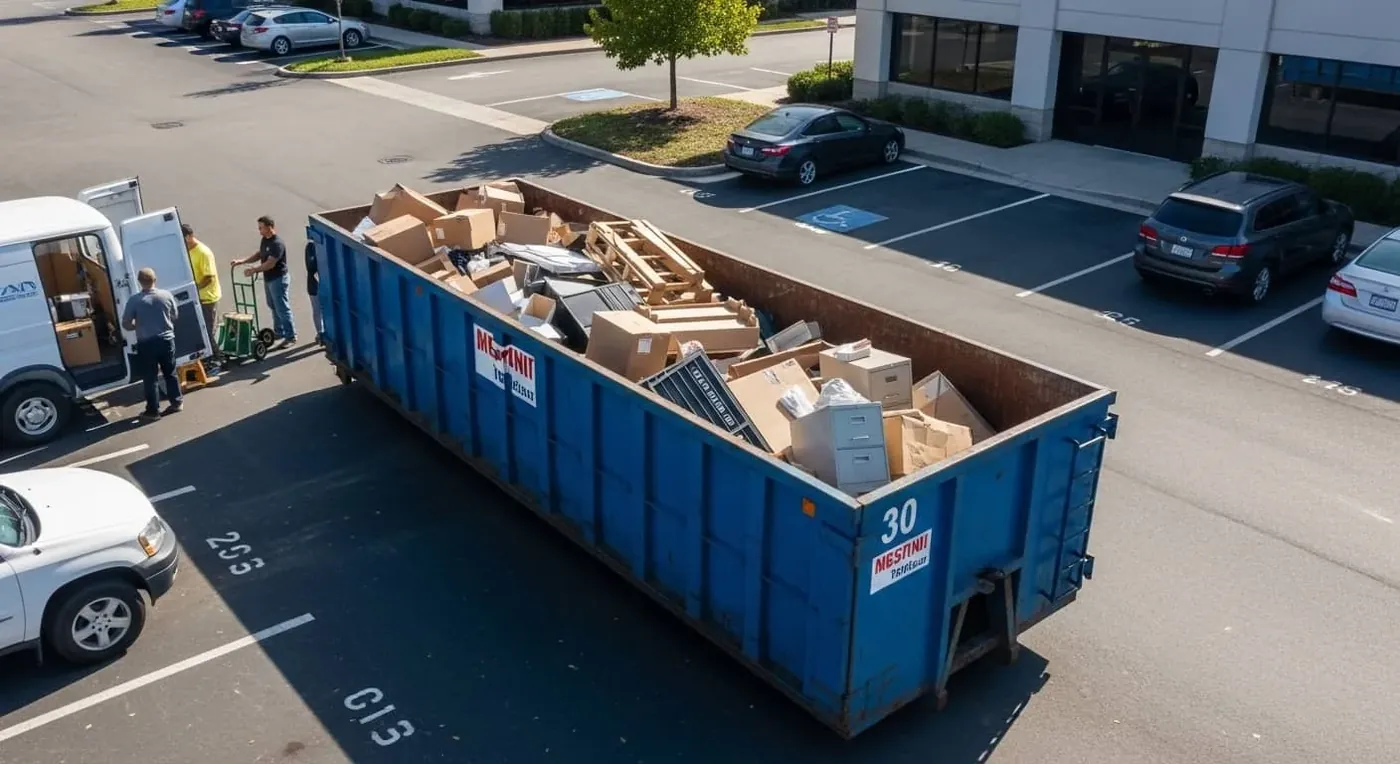
We get this question on the phone almost every day: "can I just throw this in the dumpster?" Usually the caller is standing next to an old water heater, a dead TV, or a leftover can of paint, and they want a straight answer before we drop a container in their driveway. In DuPage County, the honest answer is "it depends" — and getting it wrong isn't a minor inconvenience. Landfills reject loads with banned material, our trucks get turned away at the transfer station, and that comes back to the customer as a rejected-load fee or a second trip. This guide lays out exactly what Illinois law bans from landfills, what that means for your roll-off, and where the banned stuff actually needs to go in DuPage, Will, and Kane counties.
Why This Isn't Just a "House Rule"
A lot of homeowners assume disposal restrictions are something individual dumpster companies invent to upsell fees. Some of it is company policy — weight limits, liability items — but the core list of banned material is Illinois state law, not our preference. The Illinois Environmental Protection Act and a handful of specific statutes prohibit certain items from ever reaching a landfill, regardless of who's hauling them. When we tell a customer something can't go in the box, it's because the landfill our trucks use is legally required to refuse it.
Banned From Every Dumpster in Illinois
Landscape Waste
Illinois banned landscape waste — grass clippings, leaves, brush, and similar yard debris — from landfill disposal back in 1990, under 415 ILCS 5/22.22. Landfills can only take it if they run a dedicated composting operation and use it as vegetative cover or under a special agency permit. In practice, that means a general construction or cleanout dumpster isn't the right container for a big pile of tree limbs or a fall leaf cleanup. If your project is mostly yard debris, ask us about our yard waste dumpster service, which routes to a facility set up for composting instead of a standard C&D landfill.
Electronics — TVs, Computers, Monitors
Since 2012, Illinois has banned CRTs, televisions, computers, monitors, printers, keyboards, DVD/VCR players, digital converter boxes, and similar electronics from the regular waste stream, under the state's electronics recycling law. You cannot legally put these in a dumpster, curbside trash can, or landfill load. The state instead runs a manufacturer-funded network of registered collectors and recyclers — see the Illinois EPA electronics recycling program for current rules. Locally, the City of Naperville runs a weekday electronics drop-off at its Fort Hill Drive facility (fees apply on certain items like older tube TVs), and most big-box electronics retailers take back smaller devices free.
Appliances / White Goods With Refrigerant
Refrigerators, freezers, window ACs, and dehumidifiers — anything holding CFC or HCFC refrigerant — have been banned from Illinois landfills since 1994. The refrigerant has to be professionally recovered before the appliance can be scrapped, which is also a federal requirement under Clean Air Act Section 608. We can pull a working or non-working appliance as part of a junk removal job once the refrigerant is certified as recovered, but it can't just go loose into a roll-off. Groot, the City's residential hauler, also picks up one appliance per week curbside at no extra charge if you call ahead.
Tires
Whole tires have been banned from Illinois landfills since 1994 under the Used Tire Management Act. Retailers must take back a used tire for every new one you buy, and the $2.50-per-tire fee you pay at the tire shop funds the state's cleanup and recycling program. A handful of tires left over from a garage cleanout can't ride in our dumpsters — return them to a tire retailer or authorized recycler.
Lead-Acid Batteries
Car, marine, and other lead-acid batteries are barred from municipal landfills under Illinois law (415 ILCS 5/22.23). Any retailer that sells them must accept your old battery in trade, one-for-one. Auto parts stores and most service centers take these for free — none should end up in a dumpster.
Used Motor Oil and Automotive Fluids
Used oil, antifreeze, and other automotive fluids have been off-limits for landfill disposal since 1996 — one gallon of used oil can contaminate a huge volume of groundwater. Most oil-change shops accept used oil for recycling free, and the household hazardous waste program below also takes it.
Propane Tanks and Compressed Gas Cylinders
Empty or full, propane cylinders are a compression and explosion hazard in a compactor or landfill cell and are not allowed in a dumpster. Small camping and grill cylinders can go to the household hazardous waste facility (up to 20 lbs), or be exchanged at most hardware stores and grocery chains running a propane exchange program.
Asbestos-Containing Material
Asbestos removal in Illinois is regulated by the Illinois EPA and, for larger projects, requires a licensed abatement contractor and advance written notice to the state before demolition or renovation begins. Regulated material has to be kept wet, double-bagged and labeled, and disposed of at a landfill specifically approved to accept it — a standard construction dumpster is not a legal destination for it. If you suspect popcorn ceiling texture, old floor tile, or pipe insulation in a pre-1980s house might contain asbestos, get it tested before tearing it out, and talk to a licensed abatement contractor rather than loading it into a roll-off.
Liquid and Oil-Based Paint
Liquid paint of any kind can't go in a dumpster — it's classified as a special waste in liquid form. Latex (water-based) paint is the easy fix: let it dry out completely, or mix in cat litter or a commercial paint hardener to solidify it, and once solid it can go in with a dumpster load, lid off so it's visibly dry. Oil-based and alkyd paint is different — it stays hazardous even after it dries, and needs to go to a household hazardous waste facility, not the trash.
General Household Hazardous Waste
Pesticides, herbicides, solvents, pool chemicals, fluorescent bulbs, and anything labeled "danger," "poison," "corrosive," or "flammable" falls under the same umbrella and doesn't belong in a roll-off.
The Gray Area: Mattresses
Unlike a handful of other states, Illinois does not currently have a statewide law banning mattresses from landfills or requiring a recycling fee at sale. That means a mattress and box spring can generally go into a dumpster here, though we'd still recommend bagging it if it's stained or pest-exposed — and it's worth a quick call to confirm current guidance with the City or your hauler, since local rules can change.
Treated Lumber and Construction Debris
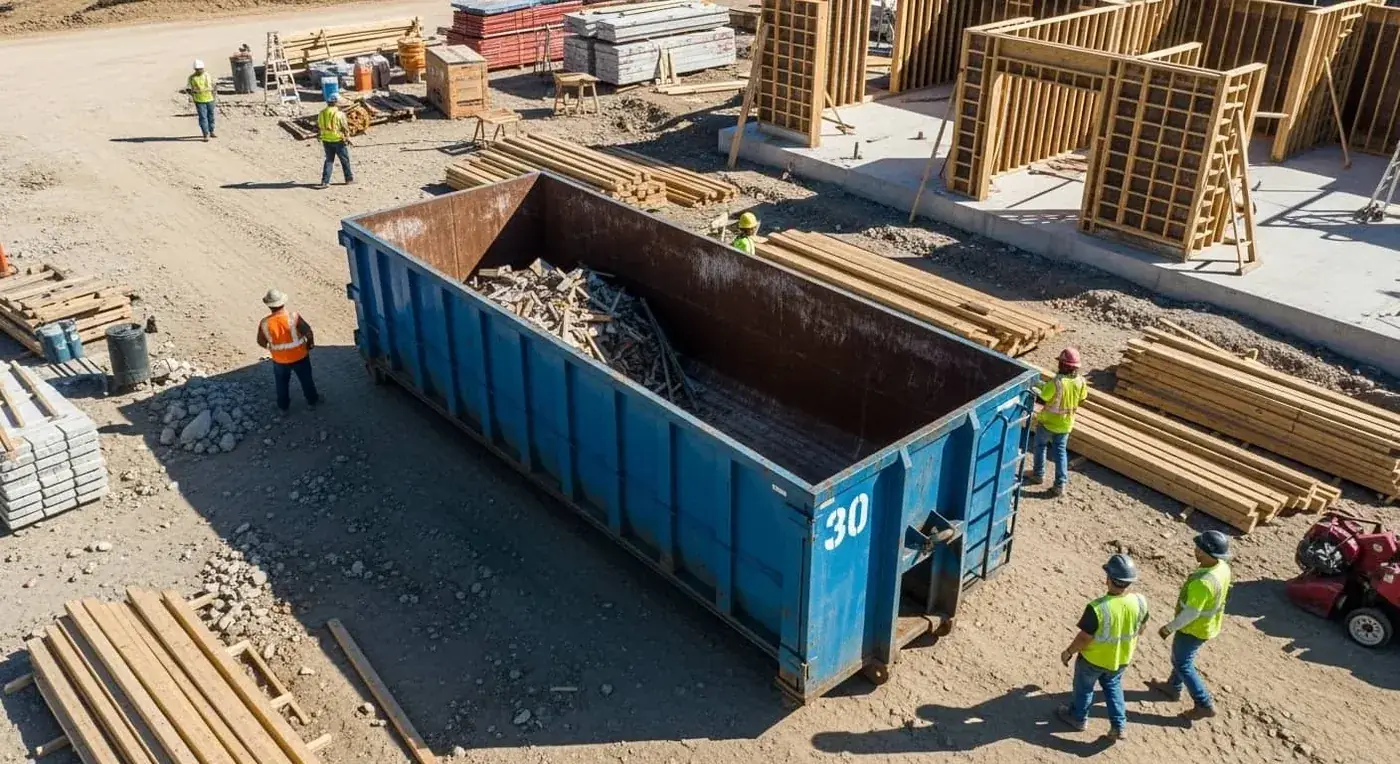
Pressure-treated lumber, plywood, drywall, roofing shingles, and general demolition debris are not on the state's banned list and are accepted at construction and demolition debris landfills, so they're generally fine in a construction dumpster or roofing dumpster. One caveat: treated wood should never be burned, and some landfills cap how much they'll take per load, so check with us before a large tear-out.
Where Banned Items Actually Go in DuPage County
The good news is that nearly everything on the banned list has a free, legal drop-off point close to home.
- Household Hazardous Waste Facility — 156 Fort Hill Drive, Naperville, IL 60540, open Saturdays and Sundays, 9 a.m. to 2 p.m. This site is jointly funded by the Illinois EPA, DuPage County, Kane County, Will County, and the Cities of Naperville and Aurora — it's free to any Illinois resident and doesn't require an appointment. It accepts automotive fluids, batteries, oil-based paint, propane tanks up to 20 lbs, small quantities of asbestos (under 50 lbs, triple-bagged), pesticides and household chemicals, fluorescent bulbs, and fire extinguishers. It does not take latex paint, tires, medications, or smoke detectors.
- Naperville Recycling Drop-Off Center — same address, open Wednesdays and Saturdays, 8 a.m. to 4 p.m. Takes paper, cardboard, glass, cans, and scrap metal. Electronics are handled separately at that location on weekdays, with fees on some larger items.
- Retailer take-back — tire shops, auto parts stores, and appliance retailers are legally required to take back the old unit when you buy a replacement, and it doesn't cost extra.
If you're not sure whether something in your pile qualifies, call us before you load it — (331) 244-7243 — and we'll tell you straight whether it belongs in the dumpster or needs a separate trip.
Allowed vs. Prohibited: The Quick-Reference Table
Matching the Dumpster to the Job
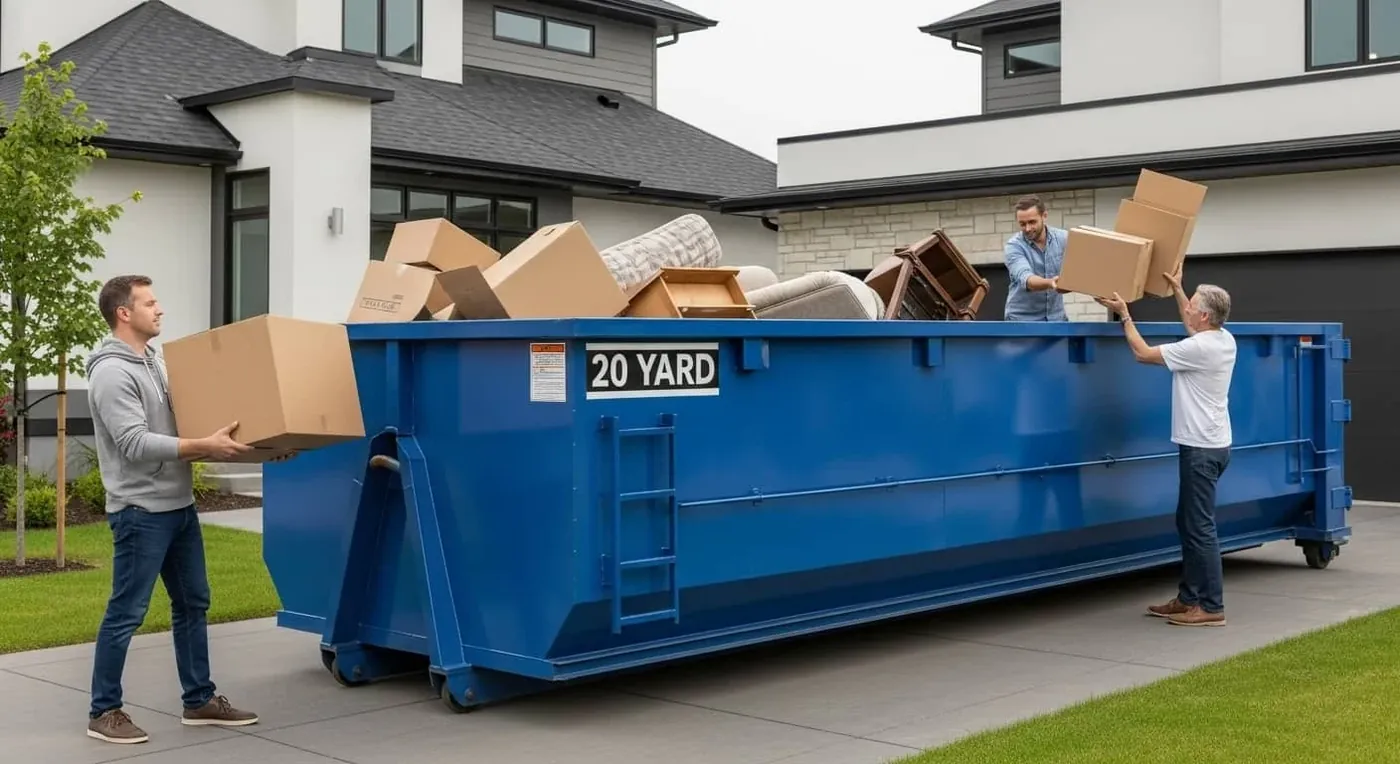
Once you know what's actually allowed, sizing the container is next. A kitchen or bathroom gut usually fits a 15-yard dumpster, most whole-house cleanouts and roofing jobs run well in a 20-yard dumpster, and a full remodel or new-construction project typically needs a 30-yard dumpster or the 40-yard for heavier volume. If you're clearing out a relative's house, our estate cleanout crew can help sort donation-worthy items from what needs a hazardous waste trip first. For a straightforward teardown, our demolition debris service handles mixed construction waste correctly the first time.
We'd Rather Tell You Now Than Charge You Later
A dumpster full of banned material doesn't get quietly sorted at the landfill — it gets rejected, and that comes back to you as a redelivery or overage fee. We'd rather spend two minutes on the phone up front. Whether you're renting for a home cleanout, a commercial job site, or a straight roll-off rental anywhere in Naperville, DuPage, Will, or Kane counties, call NNN Dumpster Rental Naperville at (331) 244-7243 and we'll flag anything that needs a separate drop-off before the container ever hits your driveway.