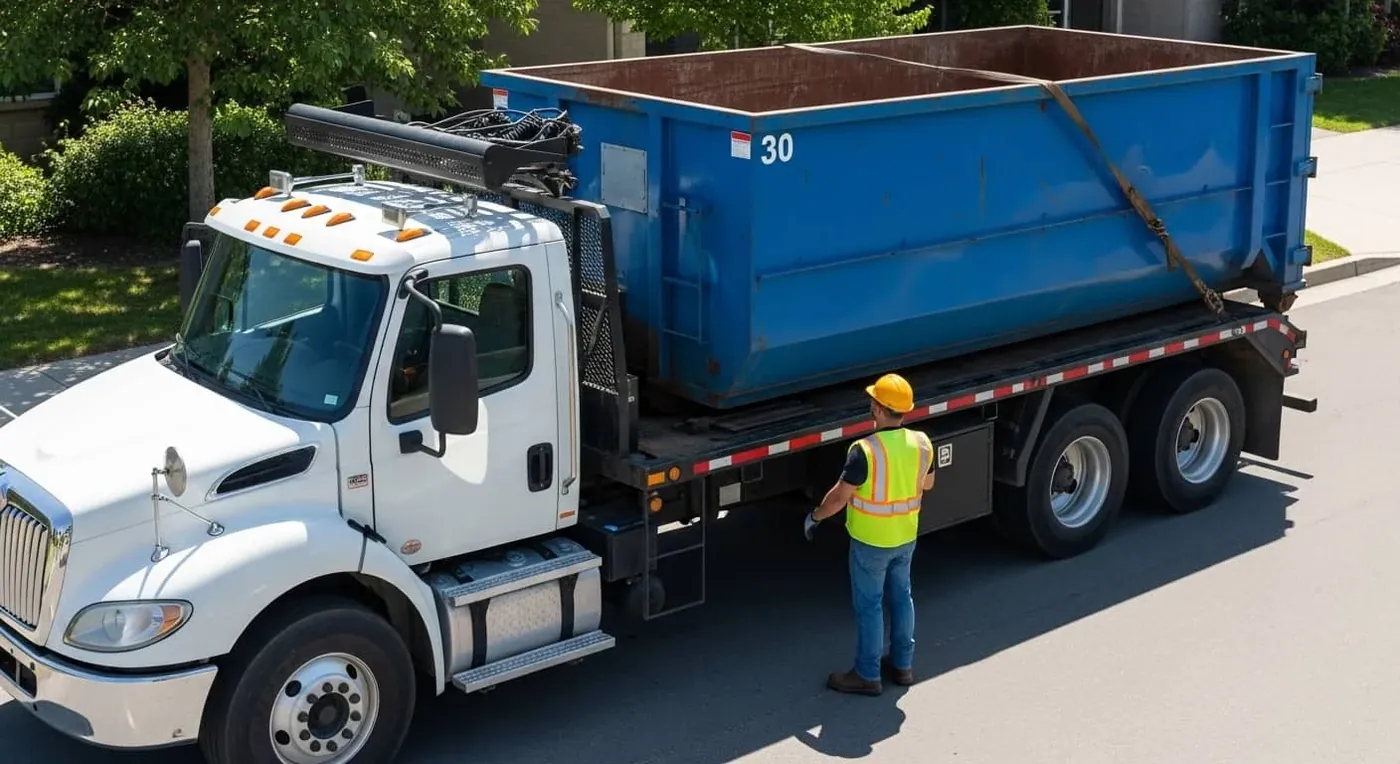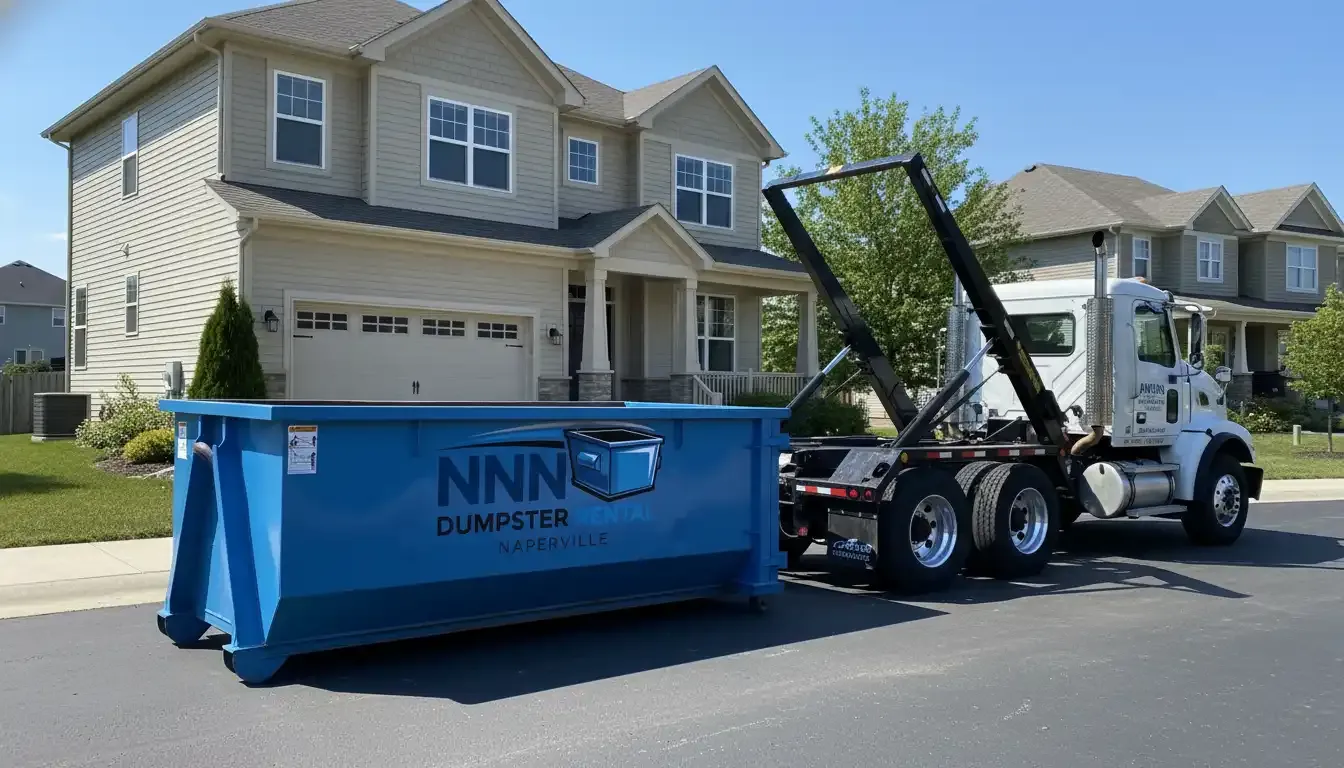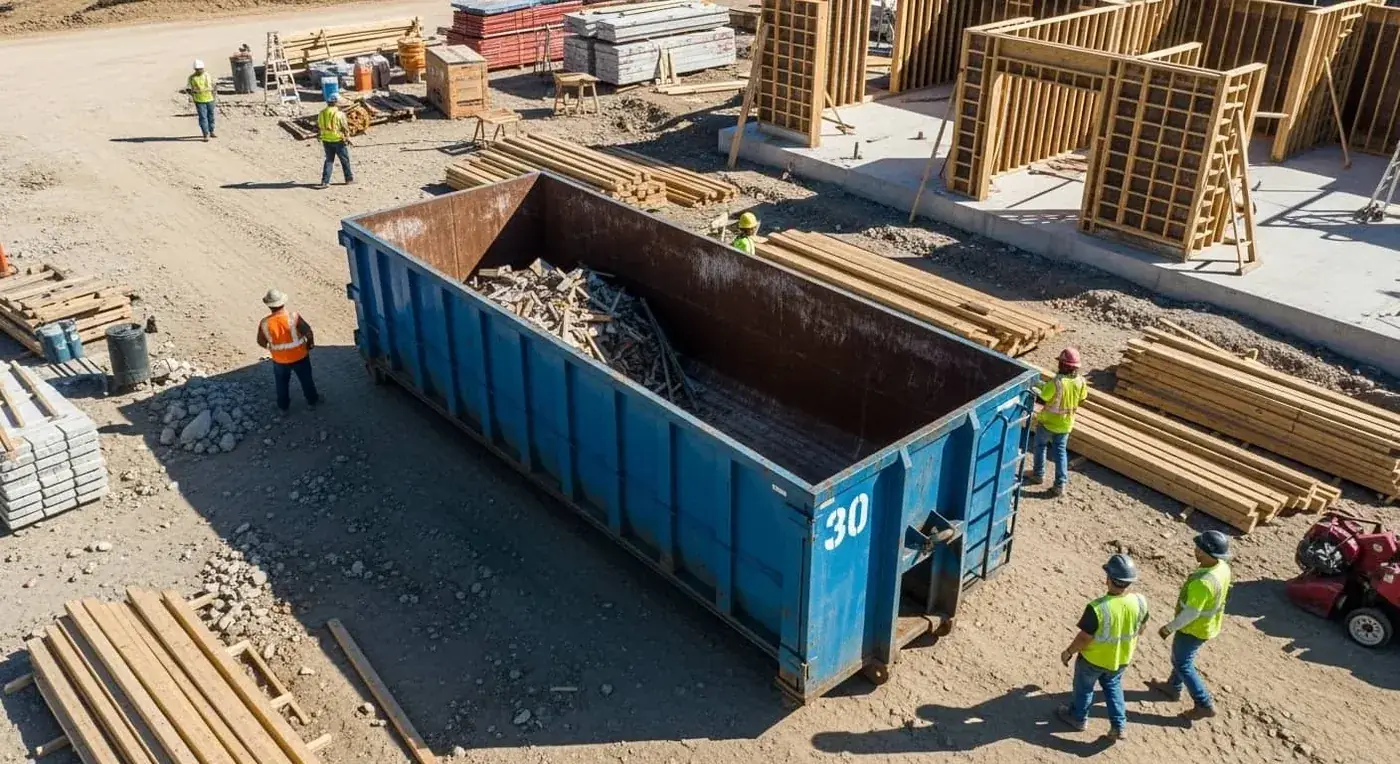
Run enough jobs in DuPage County and you learn the dumpster line item is either where you protect your margin or where it quietly eats it. The framing crew that tosses everything in one box, the demo guy who fills a 20 yard with wet plaster until it won't move, the sub who tarps nothing and gets a red tag — that all shows up on the invoice by month's end. This is the playbook we give contractors working the near-downtown teardown-rebuild streets, the 1990s and 2000s subdivisions like Ashbury, White Eagle, and Tall Grass, and the commercial buildouts along Route 59 and I-88.
Clean loads vs. mixed C&D: the money is in the separation
The single biggest lever on a construction debris bill isn't the size of the box — it's whether the load is clean or mixed. A clean load is one material: clean concrete, clean brick, clean untreated wood, scrap metal, or clean drywall with no paint, no insulation, no nails embedded in other trash. Facilities price clean loads lower because they can process or recycle the material instead of landfilling it. Mix a yard of shingles into a concrete load, or throw wet insulation on top of clean lumber, and the whole box prices out as mixed construction and demolition (C&D) debris — the most expensive tier.
On a teardown-rebuild in the Historic District or an older near-downtown lot, this matters even more, because you're usually running two or three debris streams at once: clean concrete from a foundation or driveway break-out, plaster-and-lath from interior demo, and dimensional lumber from framing. Keep those separate from day one and you'll cut real dollars off the haul. Our demolition debris service and concrete and heavy debris service are priced and staged differently for exactly this reason — don't let a crew combine them into one box for convenience.
Weight vs. volume — why "half full" still hits the limit
This is the mistake that costs contractors the most money: assuming a box that looks half empty is nowhere near its limit. Dumpsters are priced with a weight allowance baked into the size, and dense materials blow through that allowance long before the box looks full. Plaster and lath, tile and thinset, wet drywall, and clay-heavy spoil are all deceptively heavy per cubic foot. A 20 yard box that's a third full of wet lath-and-plaster demo from a Historic District bungalow can already be over its tonnage limit — you'll get hit with an overage charge on a box that visually looks like it has room left.
Same story with excavation spoil. DuPage County clay holds water, and wet clay spoil from a foundation dig weighs dramatically more than the same volume of dry fill. If you're pulling heavy spoil, order for weight, not for looks, and talk to your provider about a low-profile box rated for the tonnage. This is also why roofing tear-offs get their own sizing — see our roofing dumpster rental page for how shingle weight differs from framing debris.
Sizing by trade
Every trade generates a different debris profile, and sizing for the wrong one either strands you with a box that's full by lunch or has you paying for volume you never use. Here's how we size jobs across Naperville and the western suburbs:
For most single-trade phases on a residential job, our residential dumpster rental lineup covers it. Multi-phase remodels and small commercial buildouts on the Route 59 and I-88 corridors usually run better with a dedicated construction dumpster rental account so sizing and swap-outs get scheduled around your actual phase timeline instead of guessed at up front.
Staging and swap-out scheduling on tight subdivision lots
Naperville lots are not forgiving. Subdivisions like Ashbury, White Eagle, and Tall Grass have narrow side yards and HOA rules about box placement, and near-downtown lots often have zero setback and street parking to work around. A few things that keep swap-outs from turning into a headache:
- Confirm placement before delivery day. Driveway, street (with a permit), or a compacted spot on the lot — decide it before the truck shows up, not while it's idling in the street.
- Schedule swap-outs around your trade sequence, not the calendar. A box that's swapped a day early costs you an extra haul; one swapped a day late stalls the next trade. Tell your provider your framing-to-drywall or demo-to-framing transition dates up front.
- Protect the surface. Plywood or planking under the wheels on a driveway prevents cracking, especially with a loaded 30 or 40 yard box — see our notes on driveway protection during dumpster delivery.
- Winter freeze-thaw changes the math. Once the ground freezes and thaws through a Chicago-area winter, unpaved staging areas turn to mud and driveways get more brittle. Plan concrete and spoil hauls for the fall or spring when possible, and expect slower swap-out turnaround in January and February.
If you're staging multiple boxes across a commercial buildout, our commercial dumpster rental team can run a rotation schedule instead of one-off orders, which is usually cheaper and keeps the lot from getting cluttered with idle boxes.
Keeping the site legal and safe
Overloaded and over-filled boxes aren't just a fine risk — they're a driver-safety issue, and haulers will refuse to move a box that isn't loaded correctly. The rules are simple:
- Level-load rule. Debris should not rise above the top rail of the box. A pile mounded above the rail can't legally travel on the highway and won't get picked up without you re-loading it first.
- No overloading by weight. Every size has a tonnage limit built into the rate. Going over it means an overage fee at best, and a box the truck can't safely lift at worst.
- Tarp loose or wind-prone debris. Insulation, packaging, and loose drywall scraps blow out of an open box and become a code enforcement problem for the whole street. A tarp is cheap insurance.
- Nothing hazardous. Paint, solvents, asbestos-containing material, and fuel don't go in a construction box under any circumstances — call your provider for proper disposal routing instead.
Illinois landfill bans that will get a load rejected
Illinois bans certain materials from landfill disposal, and a load with banned material mixed in gets rejected at the gate — a wasted trip and a re-sort on your dime. Materials contractors most often trip up on: whole tires, lead-acid batteries, motor oil and other liquids, and yard waste landfilled outside a permitted composting operation. If you're clearing a lot with mature trees or doing landscape work alongside the build, route that material through our yard waste service instead of tossing it in the C&D box — it'll get bounced otherwise.
Clean construction or demolition debris (CCDD) — uncontaminated concrete, brick, and soil — has its own handling category in Illinois, separate from general landfill disposal, and using the right facility for it is part of what keeps clean-load pricing lower. For the full regulatory detail, the Illinois EPA's CCDD program page lays out what qualifies and what doesn't. The US EPA's C&D debris data is also worth a look if you want the national context on why separation and recycling rates matter to disposal cost.
What the driver actually needs
Half the delivery delays we see on Naperville jobs come down to access, not scheduling. Walk the approach the way the driver will see it before you book:
- 60 feet of straight approach. Roll-off trucks need a long, straight shot to back into position — a tight cul-de-sac curve or a driveway with a hard dogleg can turn a five-minute drop into a stuck truck.
- Overhead clearance. Low tree branches — common on the older, tree-canopied streets near downtown — and low utility drops are the top cause of a driver refusing a delivery on-site. Trim or flag anything under about 14 feet before delivery day.
- No wires in the drop zone. The truck's hoist arm needs clearance straight up, not just forward clearance.
- Firm, level ground. Especially after a wet spring or a freeze-thaw stretch, soft ground next to a driveway can cause a box to settle unevenly once loaded.
If you're not sure whether your site clears these, call before you order — it's a two-minute conversation that saves a wasted trip. (331) 244-7243.
Putting it together
None of this is complicated, but it's exactly the detail that gets skipped and shows up as an overage charge, a rejected load, or a stuck truck weeks later. Separate clean loads from mixed C&D, size by trade and weight rather than by eye, and confirm access before delivery day. Whether you're gutting a bungalow near downtown or running a buildout off Route 59, we size and schedule Naperville and western suburb jobs — DuPage, Will, and Kane counties — every week. Check current sizing on our services page or call (331) 244-7243 and we'll walk the job with you before you order.